On the Hunt for Big-Nosed Monkeys in Bako National Park
August 6, 2024
It’s 6:15am and I’m sneaking out of the dorm room. I love Asia in the mornings because it’s always bustling. So I’m dodging shoppers and motorbikes as I make my way to the open air market to catch the bus to Bako National Park. I’m very early, but only one bus goes each hour and it leaves at 7am OR when it’s full. If I miss it, I won’t get to Bako until 10, giving me only 5 hours in the park. So early it is.
I load onto the bus, pay less than a dollar in ringgit, and read my book. I never go anywhere without it for this exact reason.
At 7, the bus pulls away, almost every seat full. We travel through the Sarawak countryside: structures sprawl everywhere. The bus stops on what seems to be a random street corner. There is a covered gazebo and lines of small shacks and tarps along one side of the road, and jungle on the other. Somehow, the herd of us visitors manage to figure out that we’re supposed to walk about five minutes down the road. There, we see a sign for Bako National Park Boat Terminal.
We have to take a boat to reach the park proper. Boats can carry five people and cost 200 ringgit. I know this in advance, of course, because I researched this process and came prepared (with cash, might I add). So I grab the first four people I see (a man in his 40s who is a professor, a young couple from Oz, and a German backpacker) and we make it onto the first little speed boat. We get our boat driver’s number because we have to go back with him at 3:00pm when the park closes.
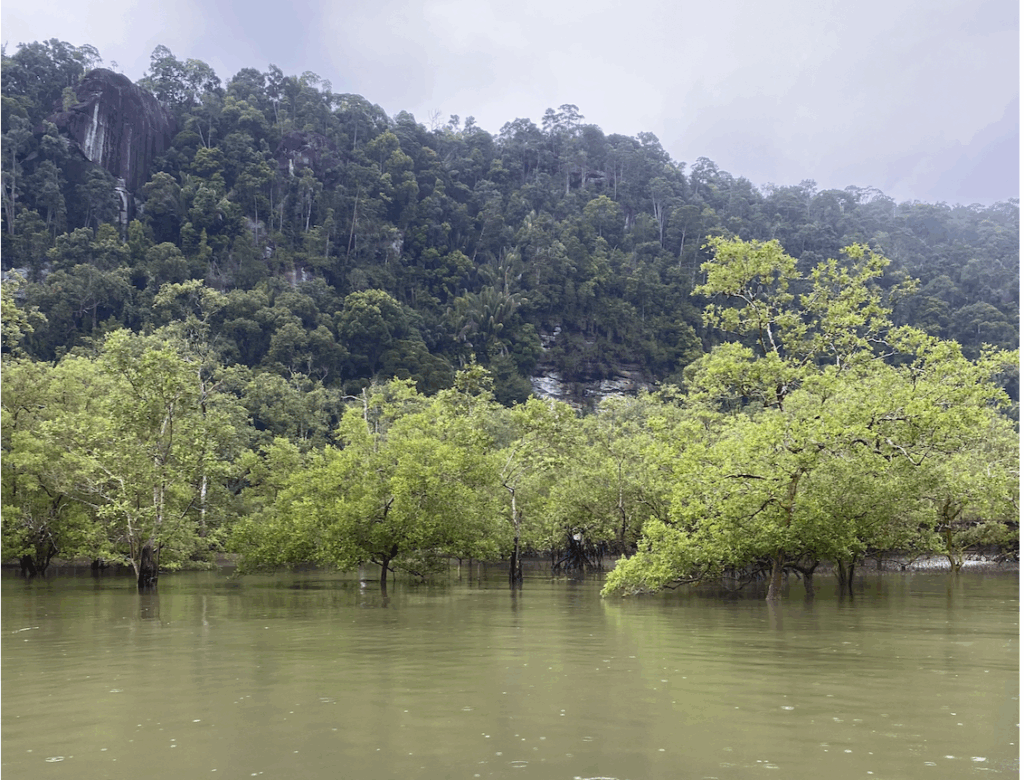
He zooms us down a massive channel. A village on the water teeters on stilts across the way. Soon, the scenery turns to mangrove trees growing right out of the brackish water.
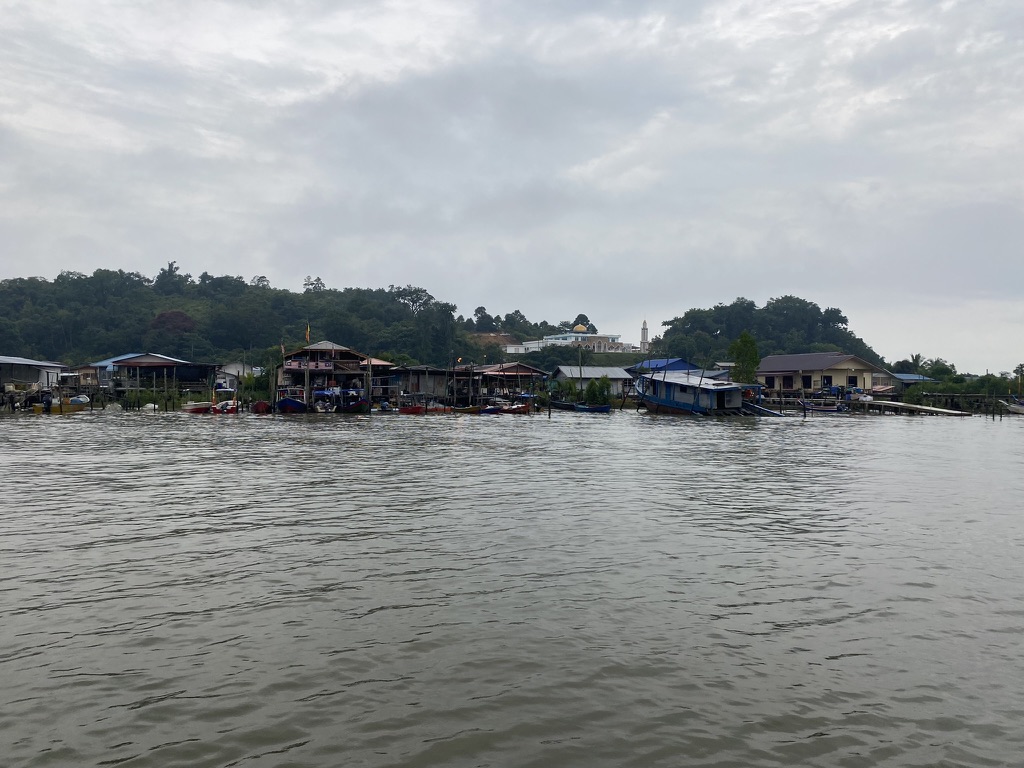
We speed along the coast of the peninsula that houses Bako National Park, the water spraying around us is part of the South China Sea. Somehow this fact feels shocking. I planned a trip to Borneo, so arriving is wonderful, but not a shock because I was anticipating it. But I didn’t “plan” a visit to the South China Sea so being here feels as suddenly odd as it did on the Ha Giang Loop to look across the valley and know I was looking at China.
The boat pulls up to a small dock in the middle of nowhere. I do a quick glance around the area before stepping out: Bako is home to saltwater crocodiles. We follow a boardwalk away from the inlet and the mangroves. Then, a trail takes us through the trees to the visitor center.
We’re the first to arrive for the day–first bus and first boat–but a small number of people can stay overnight at Bako in the national park hostel. It’s expensive for extremely basic conditions, but I would have done it if not for the fact that it’s high season and they were booked up long before I even decided to visit Borneo.
We sign in and a park ranger talks the five of us through the trail options. Bako is all about the wildlife viewing: boars, monkeys, crocs, and reptiles. In fact, the professor is a herpetologist–someone who studies reptiles. Several of the people staying in my hostel are also herpetologists because there is a big conference going on in Kuching. Exciting for them, but when the park ranger tells the professor where he is almost guaranteed to see snakes, I make a mental note to avoid that area at all costs. I’ve survived almost 4 months of Australia and South East Asia having only encountered 1 snake and I’d like to keep it that way!
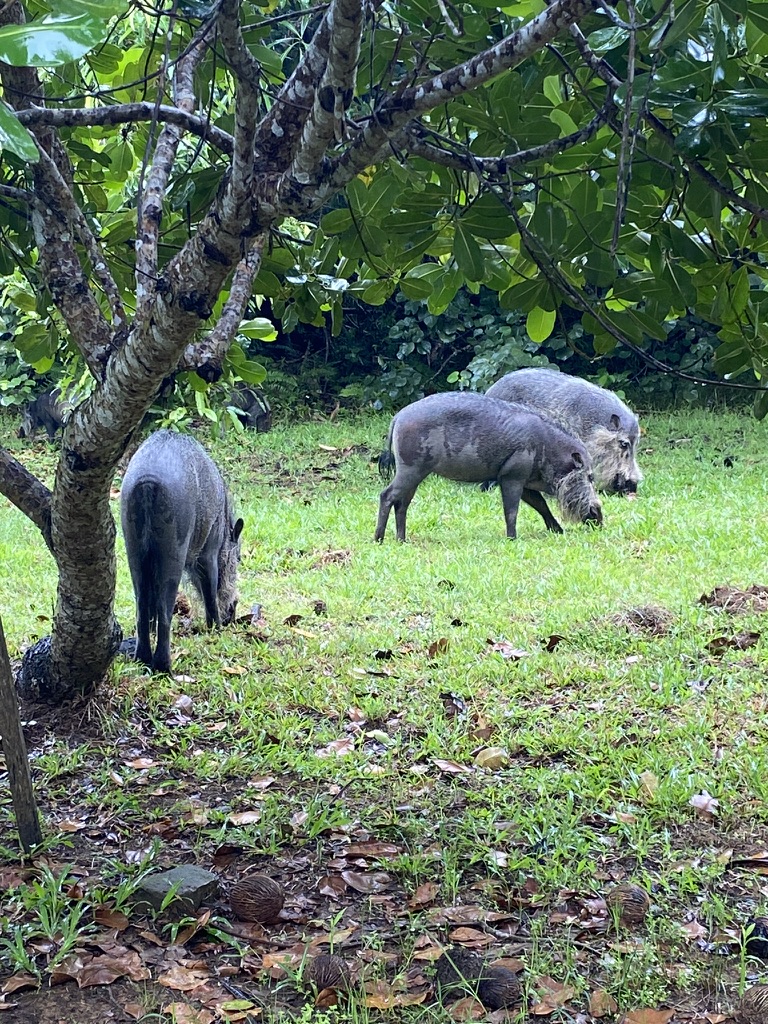
Three of us (the professor, the guy from Germany, and me) decide to team up and hike together. We set off along the trail and immediately turn the corner to see a group of Bornean bearded pigs. The wildlife viewing has begun!
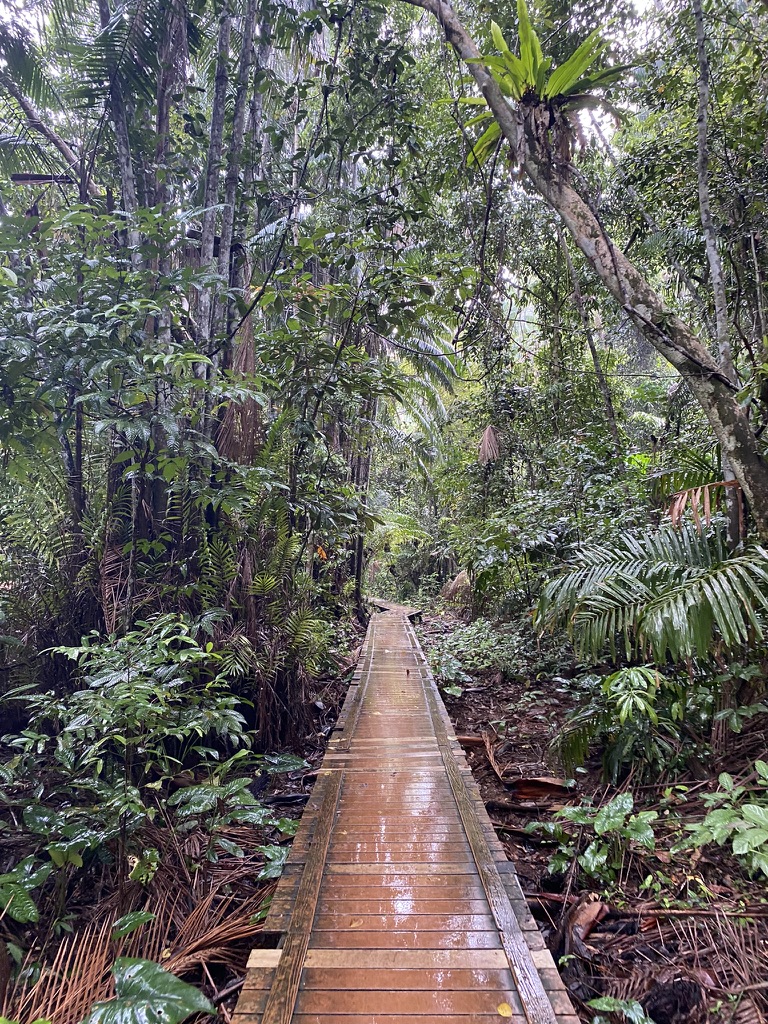
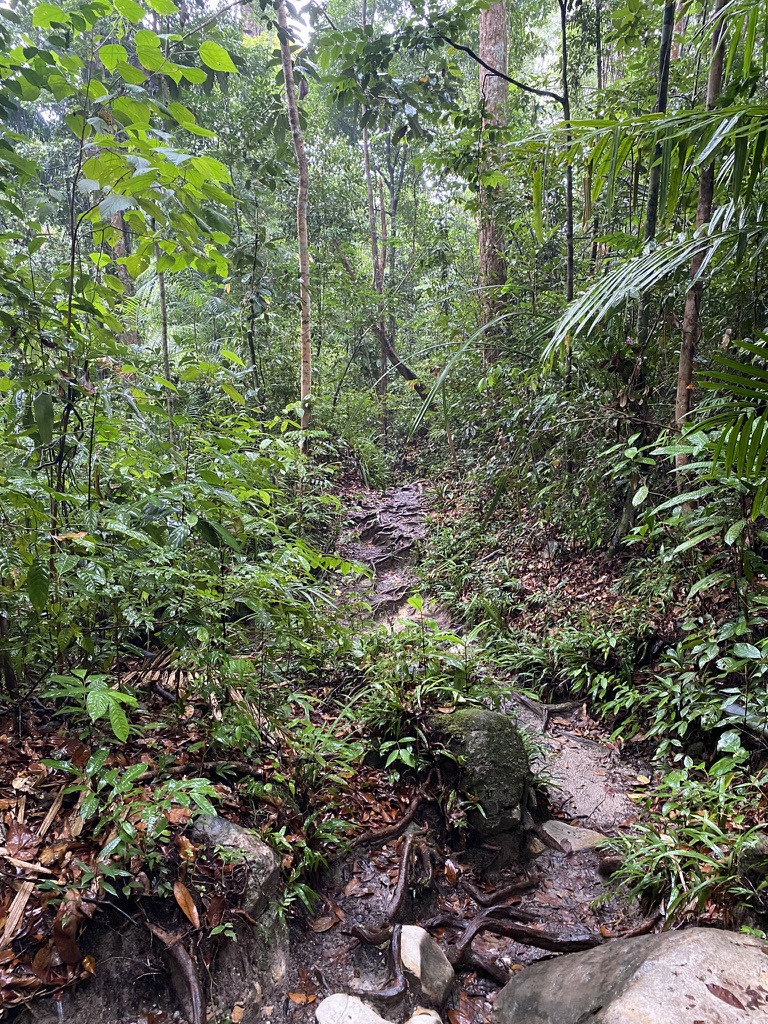
It’s humid and drizzling rain. The board walk stretches into the unknown. We consult the map and set off into the jungle.
It’s so green. The kind of green that almost hurts your eyes. It smells refreshing–the cool rain, the moist, dark soil, and the low clouds. I know that in the span of a few minutes, I’ll be hot from the humidity. I can’t help but feel it, but I’ve gotten used to the sticky, warm feeling that leaves perpetual dew on my itchy skin.
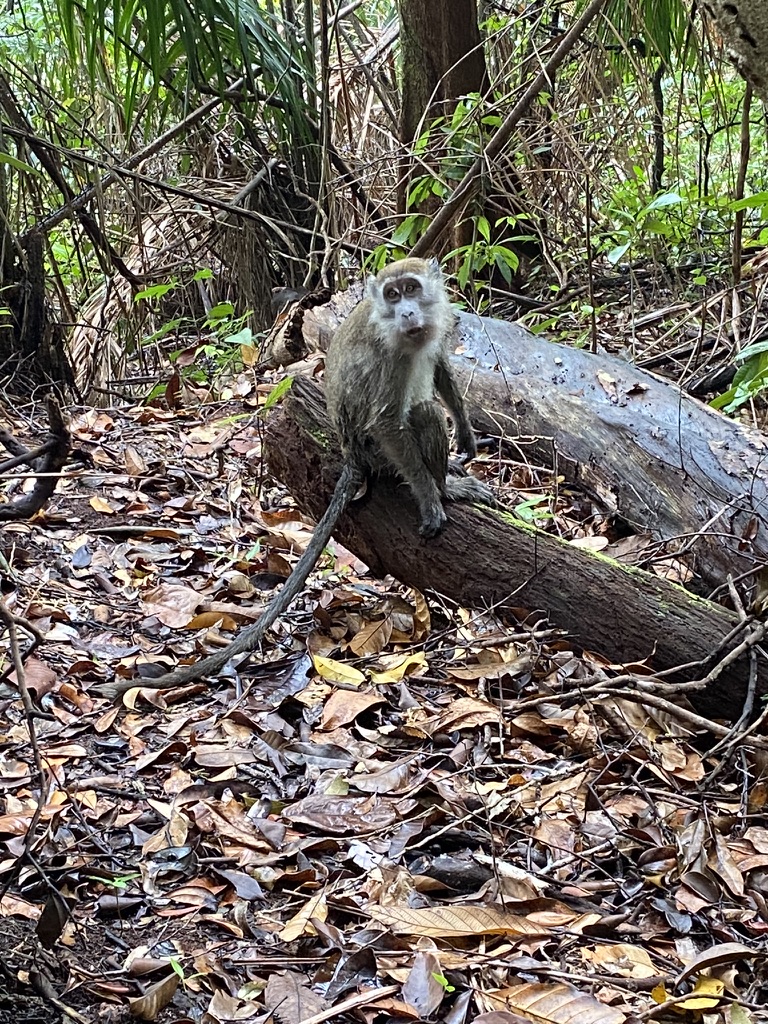
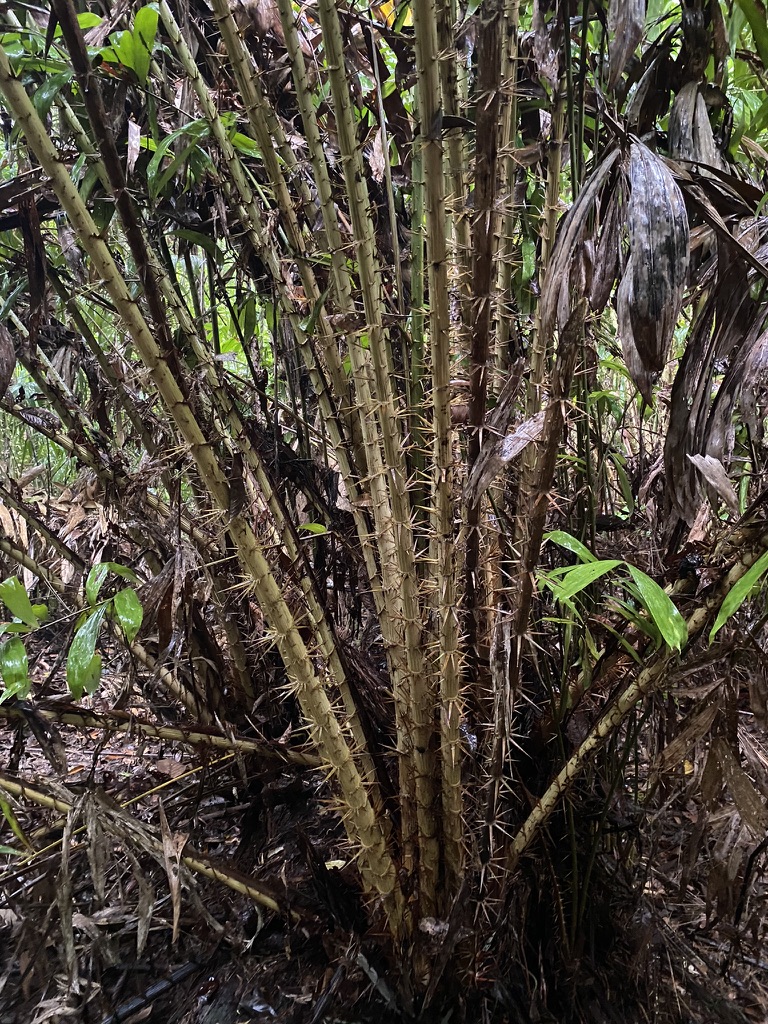
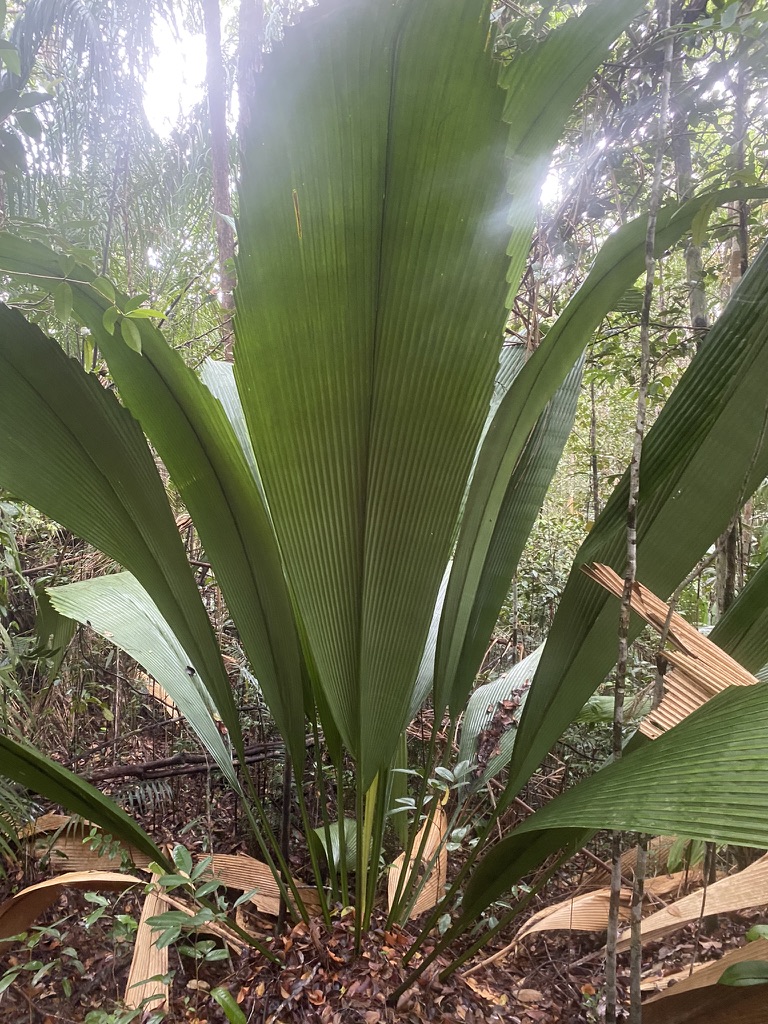
Every way I look, there’s something new to catch my eyes. Plants with razor sharp spikes. A grey monkey–a long-tailed macaque–on a tree high above and almost invisible against the white sky. Masses of greenery, long vines stretching down like traps. Massive leaves that look like a slave should be using them to fan an Egyptian queen.
I came to Borneo because it is known for it’s biodiversity. It is home to some of the oldest rainforests in the world and houses creatures not found anywhere else on earth.
It is one of those creatures that I am hoping to see today: the proboscis monkey.
If you’ve ever seen one, you might agree that the proboscis monkey is the most awkward-looking of the primates. They’re bright orange and have big noses and pot-bellies. These are, of course, evolutionary features. The pot belly leaves room for a multi-chambered stomach, which helps them break down the toxins in mangrove leaves, which other animals can’t digest. The females’ noses are smaller, while the males can reach 4 inches long. This is to amplify their mating call through the jungle.
Like many unique animals living in small parts of the world, they are an endangered species. Logging and palm plantations across Borneo have heavily impacted their habitat, but Bako National Park is the best place in Sarawak to see them.
So I’m hopeful that I’ll see one–and not just see it, but see it close by since I don’t have any binoculars.
Soon the boardwalk gives way to a dirt trail and we climb up and down small undulations in the land. The ground is tangled with roots and the rain has stopped but a slight breeze moves the leaves above us. I’m in front and suddenly there’s a huge crash through the trees–branches moving, leaves fluttering. A thud.
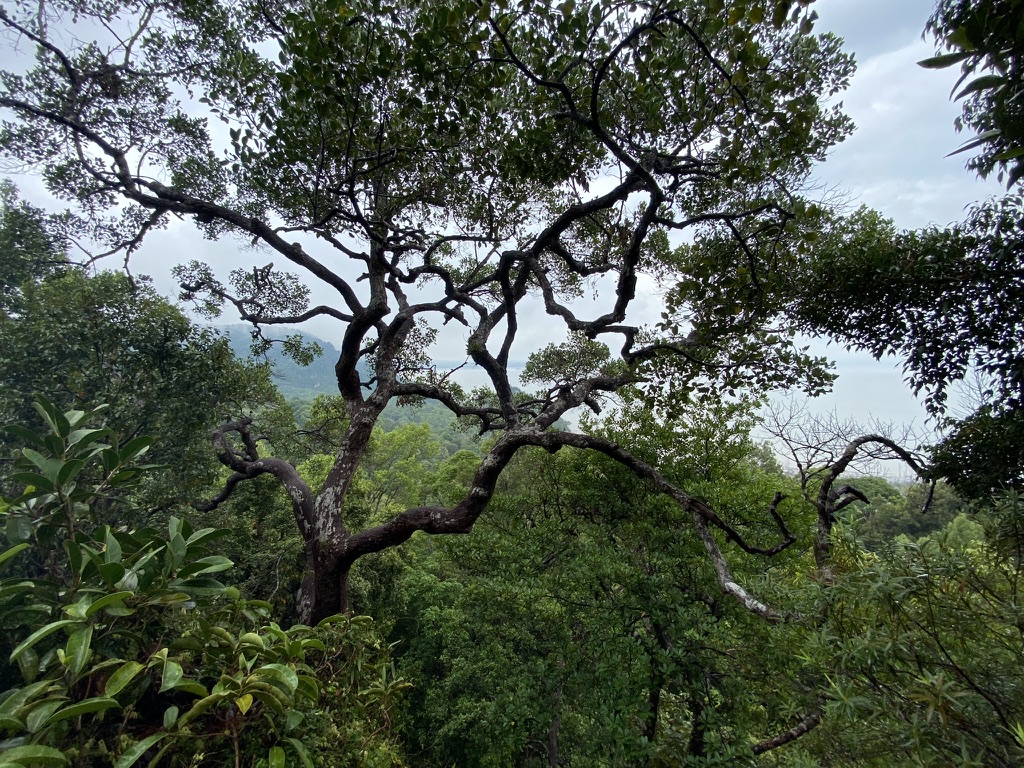
My heart practically leaps out of my chest, but the noise is moving away. Definitely a monkey traveling through the trees–and probably a proboscis. Bako also has long-tailed macaques and silverleaf monkeys, but they’re both small and agile. Proboscis monkeys are weighty (up to 45 pounds) and more inclined to bend trees with their weight.
We continue on the path. Slowly. Every few steps I stop to look around.
The side trail we take leads us the sea and a mangrove forest. The tide is going out so much of the trees rise out of sand rather than water. This is fantastic for two reasons.
- With the water receding, I feel less inclined to scan every inch of space for crocodile eyes.
- I get to see my first hermit crab scuttling among the sandy ground.
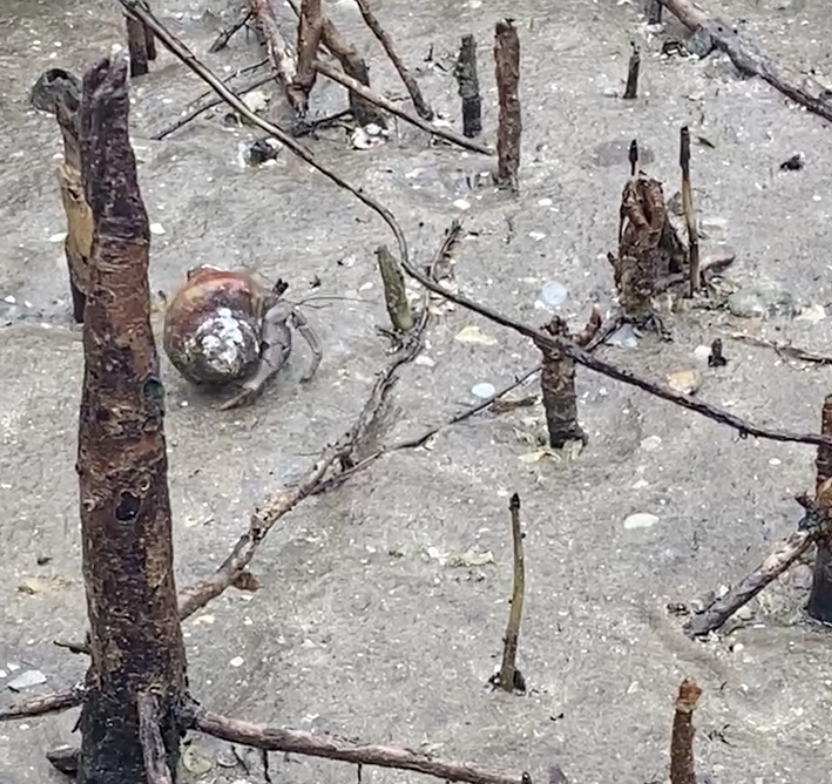
Oddly, the hermit crab is a shocking highlight. I have never seen one before and I as stand gazing at it, I realize that in my mind they hold a similar weight to a small myth. I think this is because my mom used to read me a picture book about a hermit crab when I was very little and I’ve never thought about them sense, so they seem like something once forgotten and now rediscovered.
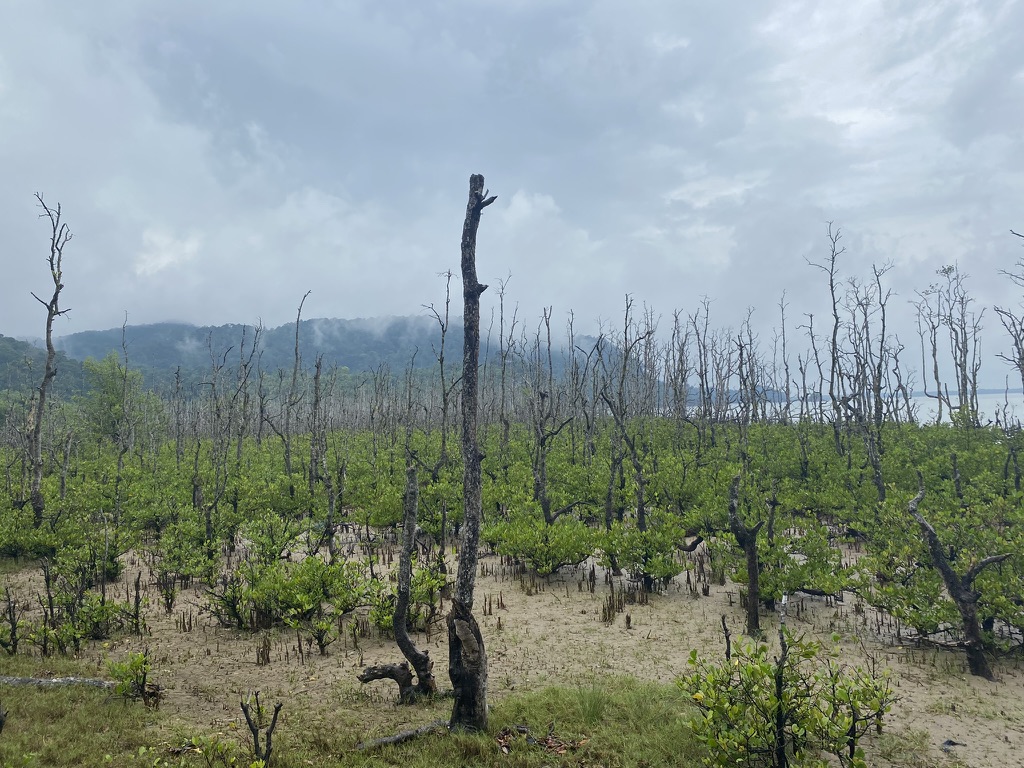
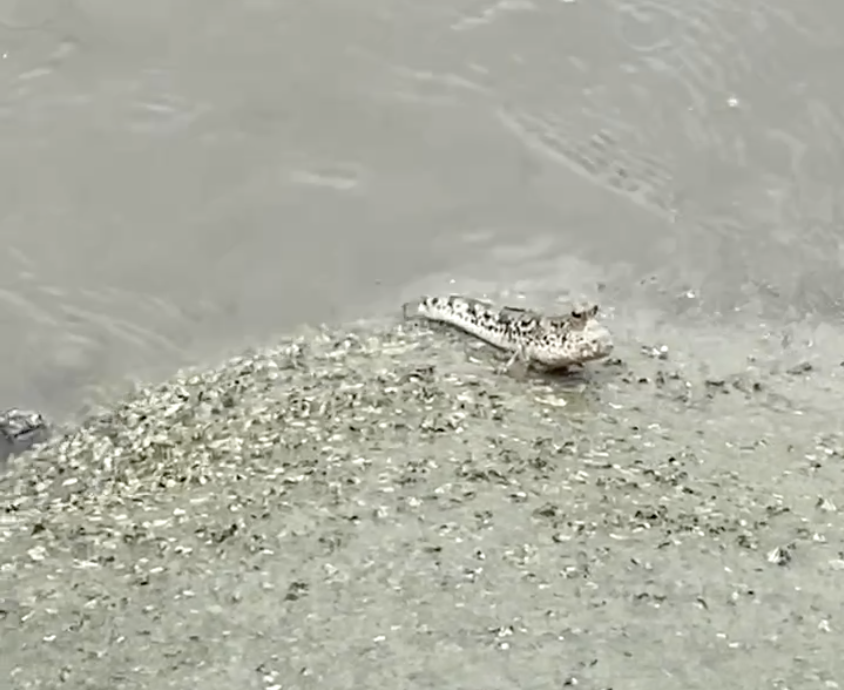
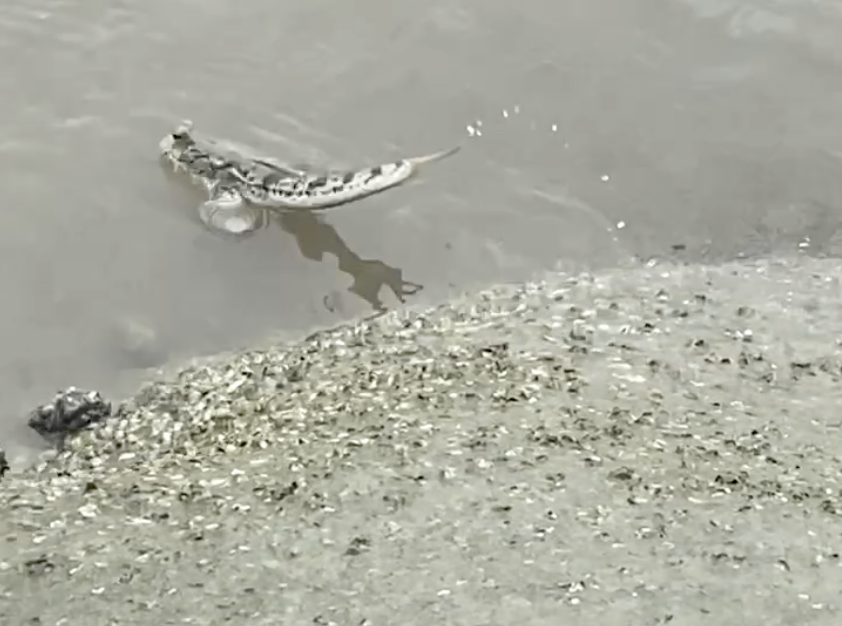
We also pick along the shoreline and notice something odd: little fish that seem to…walk?
They are tiny, maybe two to three inches in length. They have heads like frogs, two pectoral fins, and a body that tapers into a small point like a slug. They swim with their heads out of the water and jump onto rocks and sand, and then move around with their fins even on dry land. I looked them up just now as I’m writing this and they’re called mudskippers.
We head back into the jungle, ascending moss-covered ladders and emerging at a small viewpoint. The clouds have begun to lift and it is warming up. We all gulp water.
Bako is home to seven ecosystems and I’m not enough of a biologist to know if I walked through all of them, but it was evident that the land changed. Already I’d seen the dipterocarp forest (which I understand to be the type of jungle forest you learn about in school with the emergent layer, the canopy, and the understory) and the mangroves. It seemed we’d walked past some peat swamps too, but who knows.
We continue higher, climbing into the hills. The forest changes again, becoming dryer. Heath forest.
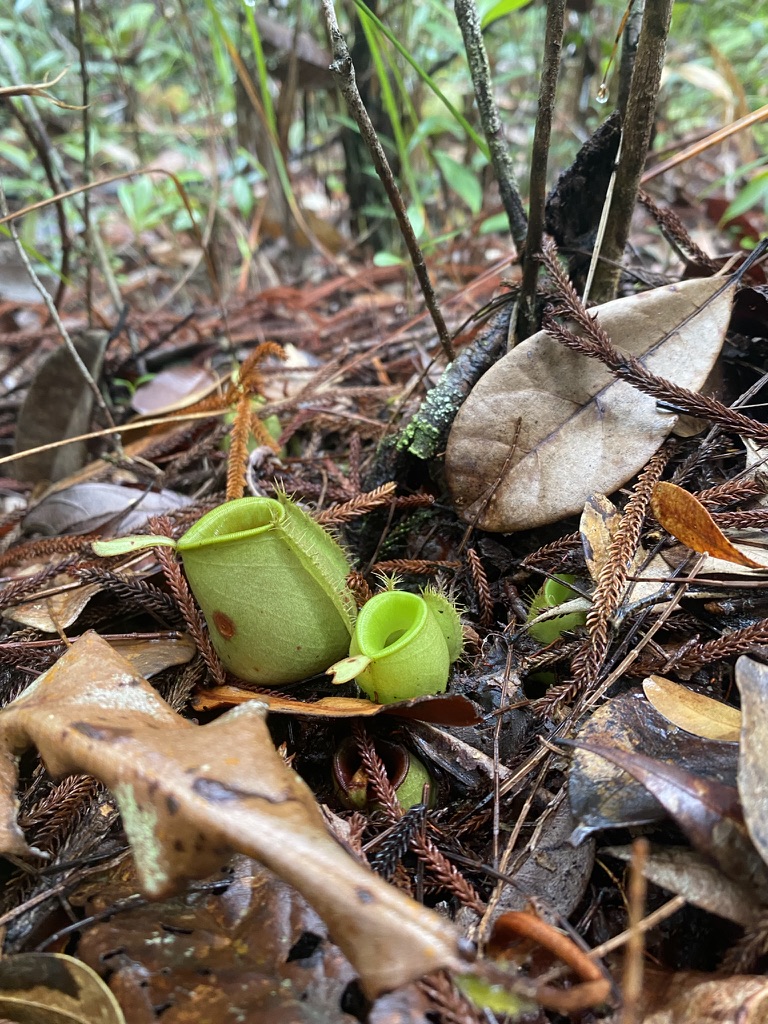
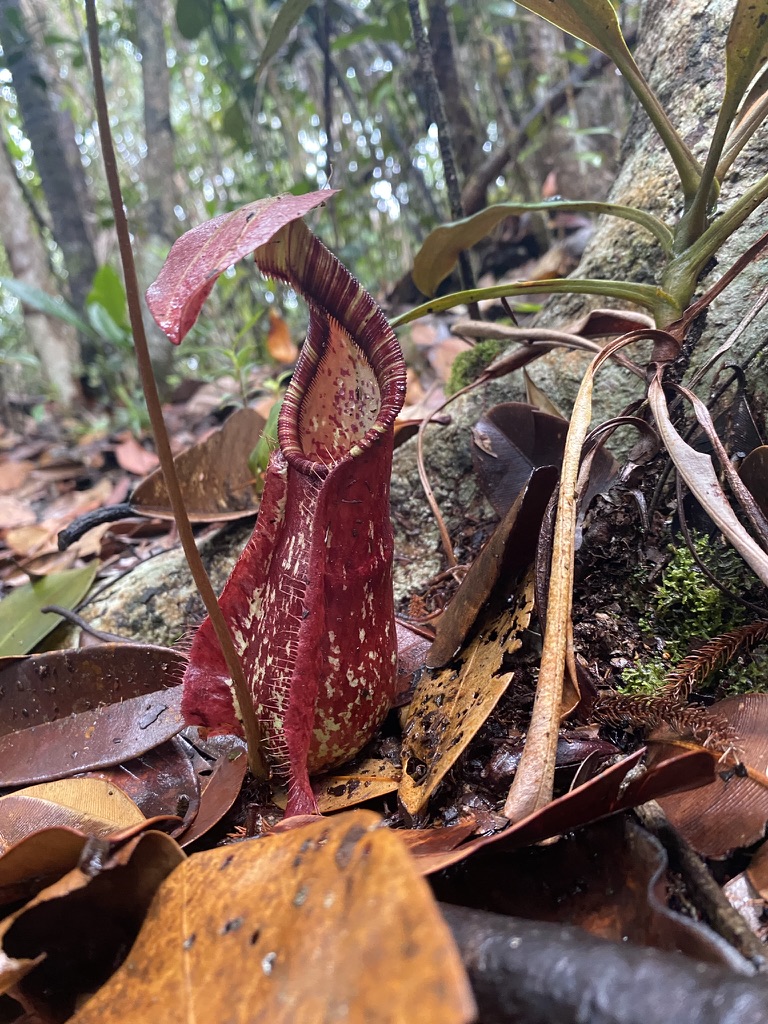
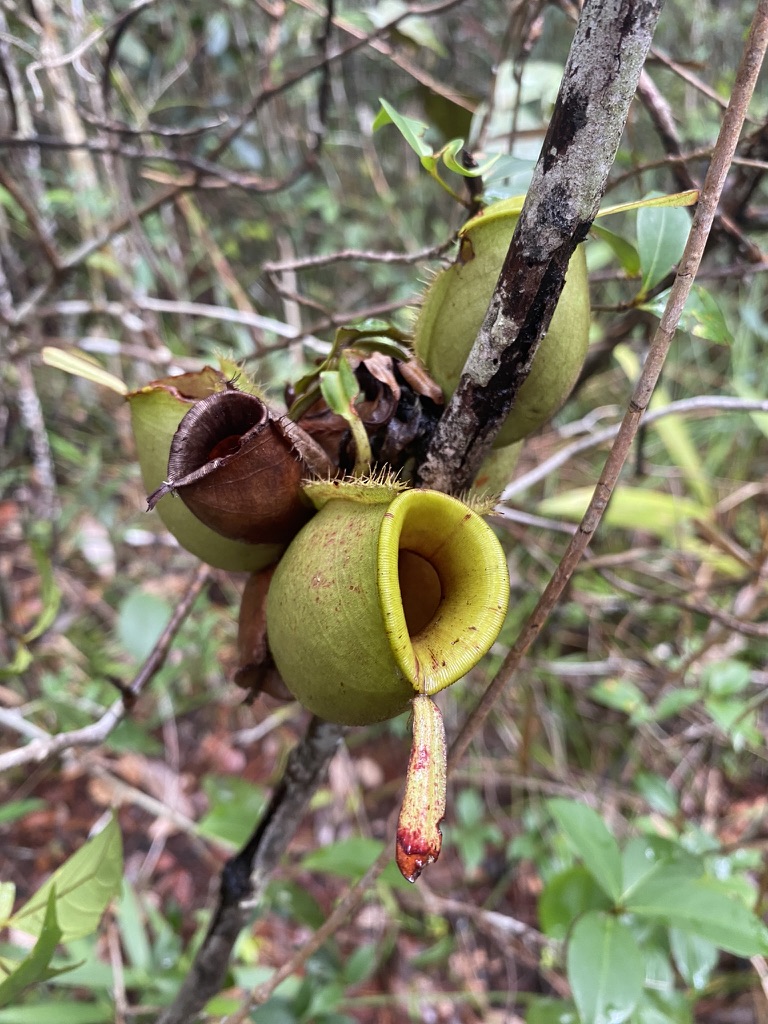
This is where we find pitcher plants. Carnivorous plants.
These plants are shaped like a pitcher (imagine that) and have slippery rims. A sweet smell attracts insects, which land on the rim and fall in. The sides are also slippery and in the bottom is a digestive fluid which traps the insect and slowly breaks it down to absorb the nutrients. I find several varieties of pitcher plants, many on the ground, but some hanging off of branches like fruit.
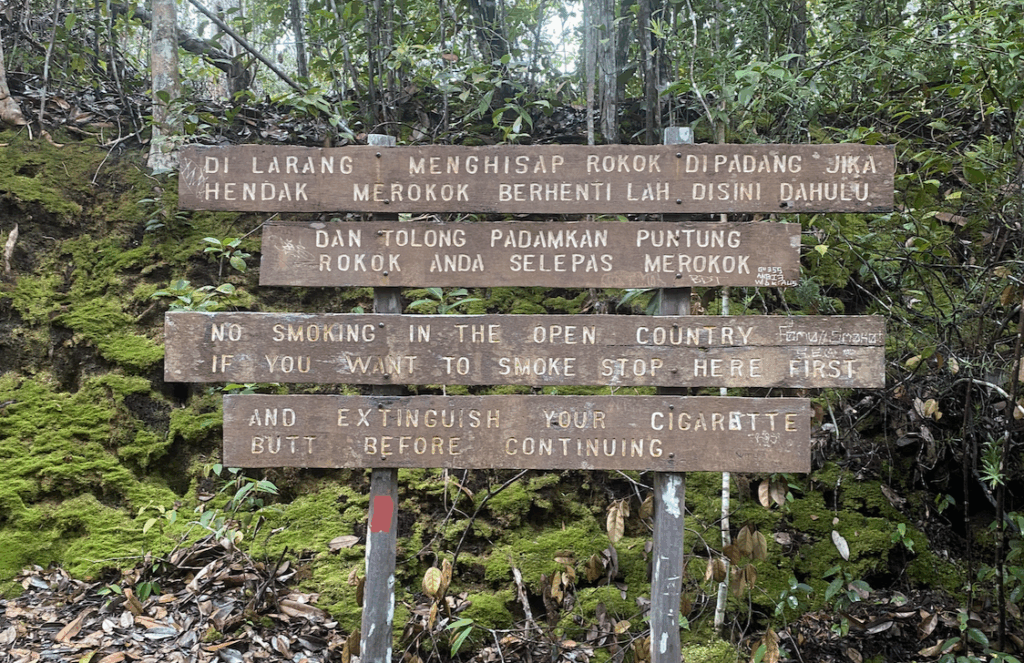
Next, I find a culturally interesting sign about smoking. It’s always fascinating to be reminded that nothing exists in a bubble and as much as Bako feels like a tiny world all it’s own, a slice of wildness sheltered from the sting of humanity, it is not. It is, in fact, part of Asia. Where people smoke. In the woods. Apparently.
We loop back to the park headquarters where the German backpacker decides to have lunch at the park cafeteria. Not me. It’s 1:00 and I haven’t yet seen a proboscis monkey. Food is for the less desperate.
The herpetologist and I take a different path, winding along a trail with a steep drop-off to the forest floor. A long-tailed macaque hangs out by the trail, giving us a curious look. Holding a macaque’s stare or smiling at them is not advised, as it’s perceived as a threat, so we watch without trying to be obvious, which is hard than it sounds.
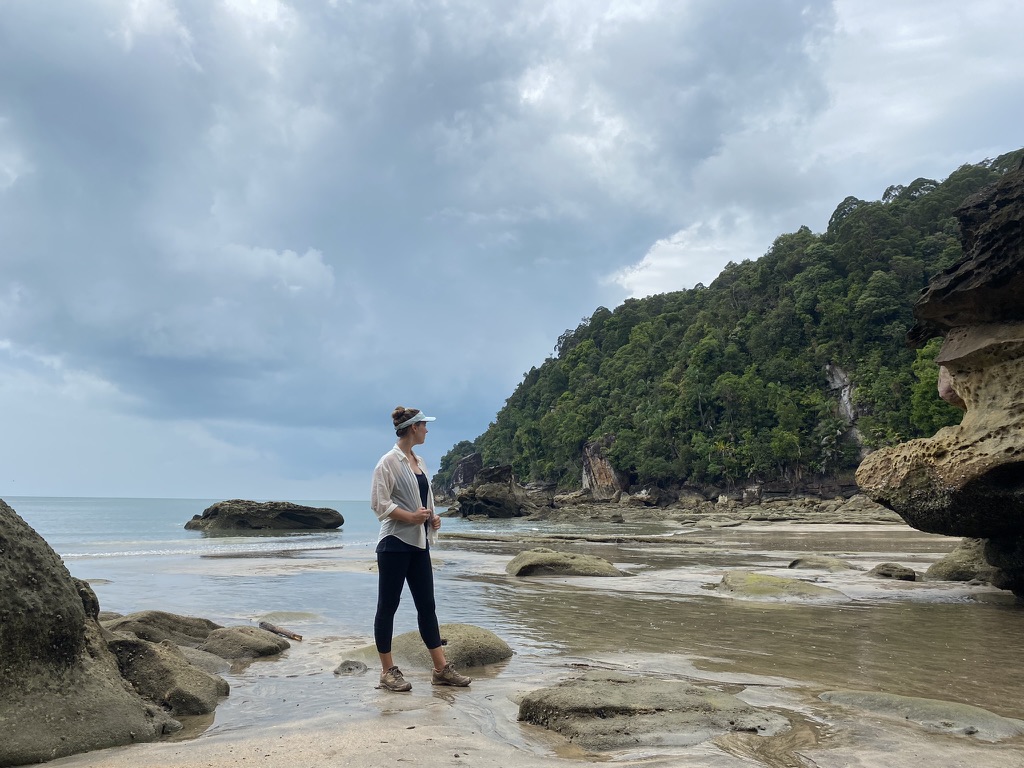
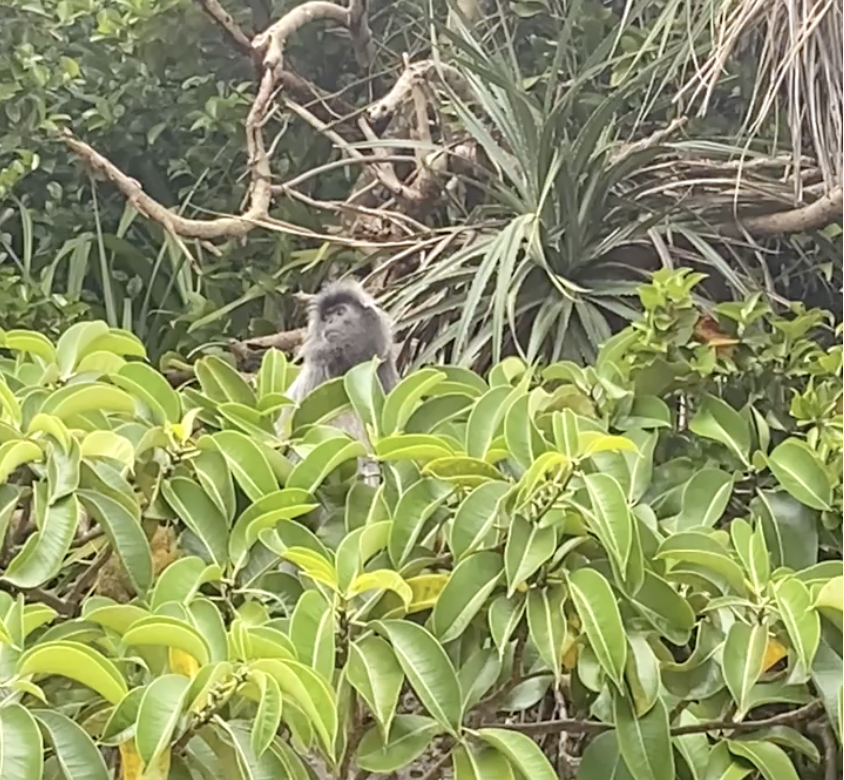
The macaque climbs a tree after a while and we continue on, soon emerging at a beach. For most of the loop walk, I’d only encountered a few other people, but now that we were on a trail close to the park HQ, there are about twenty milling about on the beach. Several of them are gathered around a tree sprouting out of the cliff side. We go over to check it out and find a silverleaf monkey gazing out at us.
Macaques are like your typical monkey–I’d already seen them all over Bali and they fit my mental image of “monkey.” The silverleaf monkey appears softer and fluffier. She (the gender is a guess) also looks less devious than the macaques, which are known for trying to steel bags and take people’s food.
The silverleaf looks serene as she surveys us from her leafy perch.
We return to park headquarters. The herpitologist–who hasn’t managed to see a reptile yet, goes out to the wood gazebo a ranger points out to find the keeled pit viper living in the eaves. That sounds like a living nightmare to me, so I go back to walk the beginning of the loop again, which the park ranger says is a somewhat common spot for proboscis monkeys. It’s 2:30, so I’m running out of time.
And yet…literal steps around the corner from the HQ building stands a young man who points into the trees. “Is that a proboscis monkey?” he asks me.
I follow his finger to the trembling leaves and lo and behold, there one is.
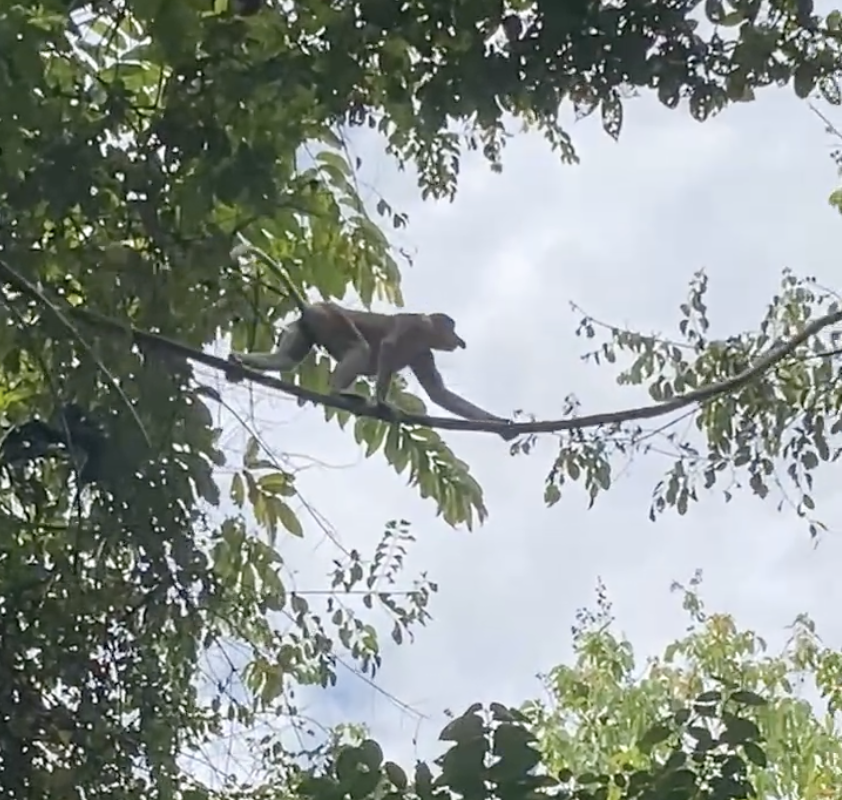
He (it has a big nose, so it must be a he) is pretty far away and shielded by leaves, but the two of us wait there for several minutes. No one else comes by, so it’s just us following the shaking leaves. The proboscis moves along slowly, methodically eating, and we follow on the boardwalk. Soon, three people with big backpacks come by and we point out the monkey. We’re pretty sure there’s a smaller one further back, but we’ve only caught a minuscule glance.
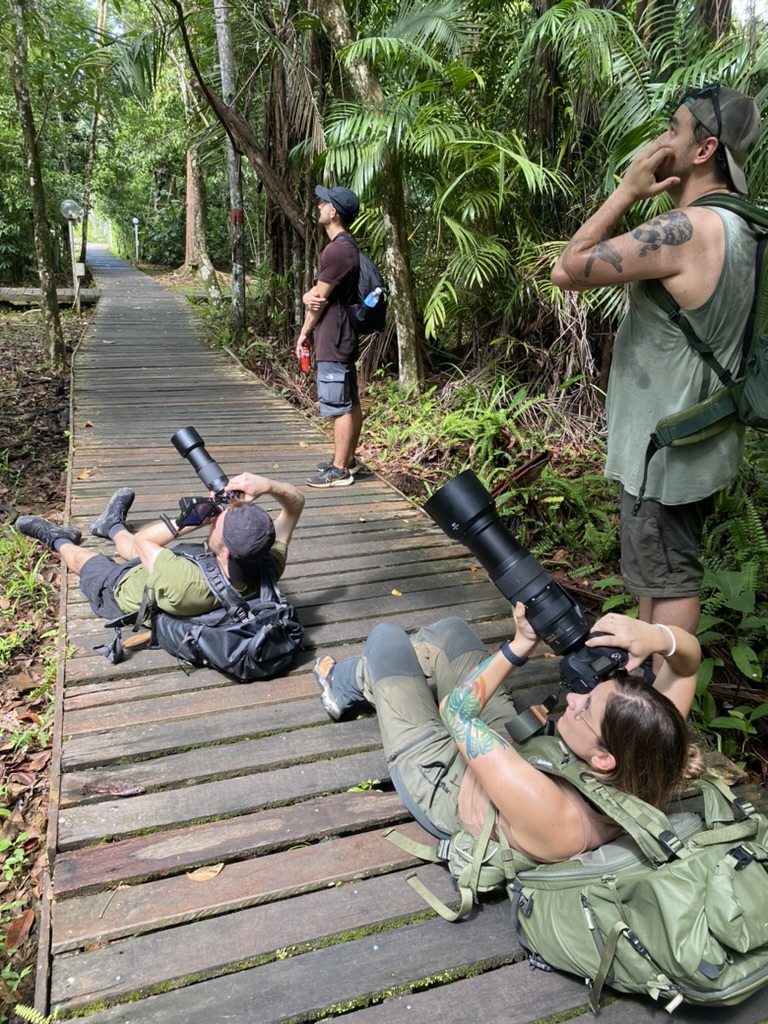
It turns out these three folks are more herpetologists and they’ve just arrived in the park because they are staying the night in the park. Ten minutes in and they’ve already seen their first proboscis.
Then, as they tell us more, we learn they’re herpetologists who run a guiding company. Two of the folks take off their massive backpacks and pull out serious cameras. As the proboscis gets closer, I manage to capture a few shots with my phone camera, but I’m seriously outgunned.
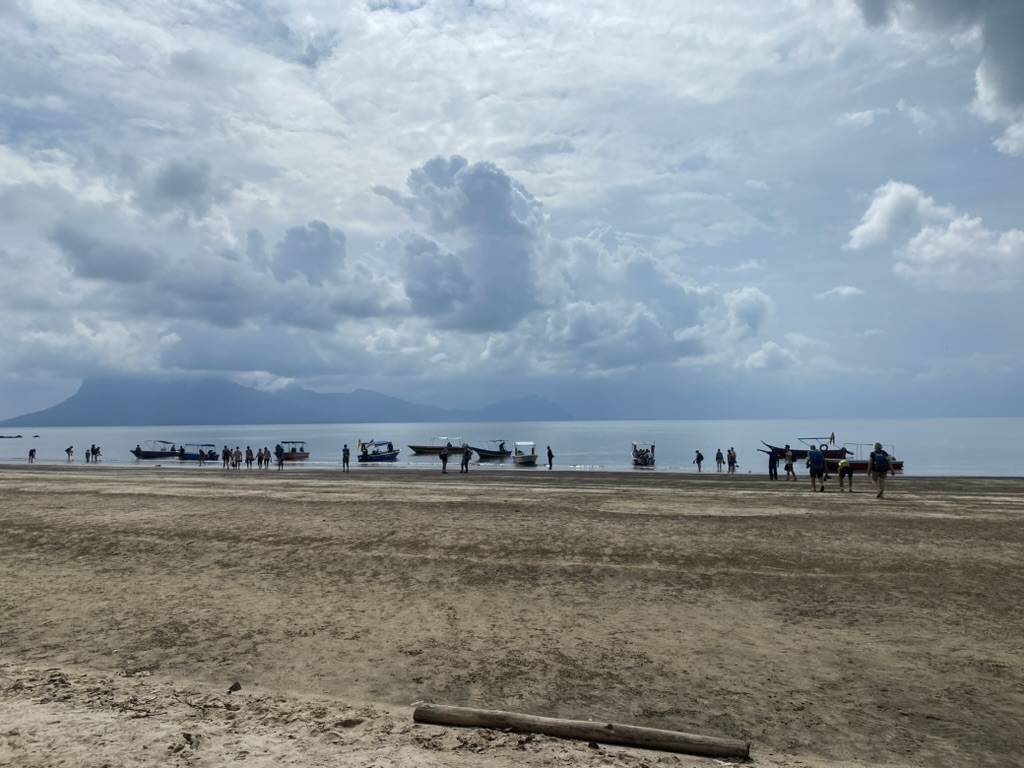
Soon, I have to go or I’ll miss my boat, so I snap a last photo and run back to shore where the tide is in and the boats are beached in the sand waiting to take the day visitors away.
Back at the boat terminal, we have to wait nearly forty minutes for the bus to come to take us back to Kuching, so my same hiking group wanders around the village. We find a few people selling fresh seafood, but no one is cooking anything up which is a shame because the last thing I’d eaten was a piece of bread with jam on the bus at 7:45.
We wander toward the bus stop and I’m saved. A woman sits under the wooden gazebo with trays of fried bananas. Six pieces for 5 ringgit (1 USD). Yes please.
I buy 2 bags, sharing them with my temporary friends, and the bus comes to take us back to Kuching. I’d gotten to see a proboscis monkey, a hermit crab, carniverous plants in their natural environment, and spent the day walking through fascinating ecosystems. Even though I am tired and damp and have eaten nothing but sugar and oil, I am thrilled.
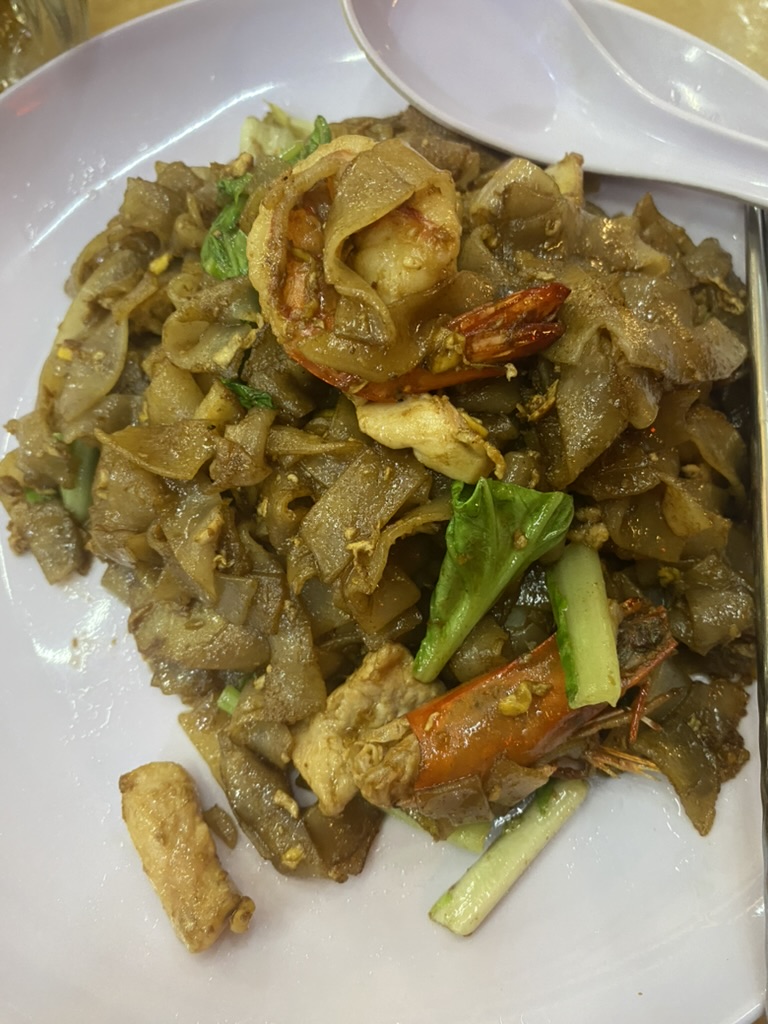
I wander through the Kuching Food Festival and get some snacks, then stop at a place in Chinatown I’d marked the day before for Char Kway Teow: stir fried noodles with shrimp and sausage, one of Malaysia’s most famous–and delicious–street foods.
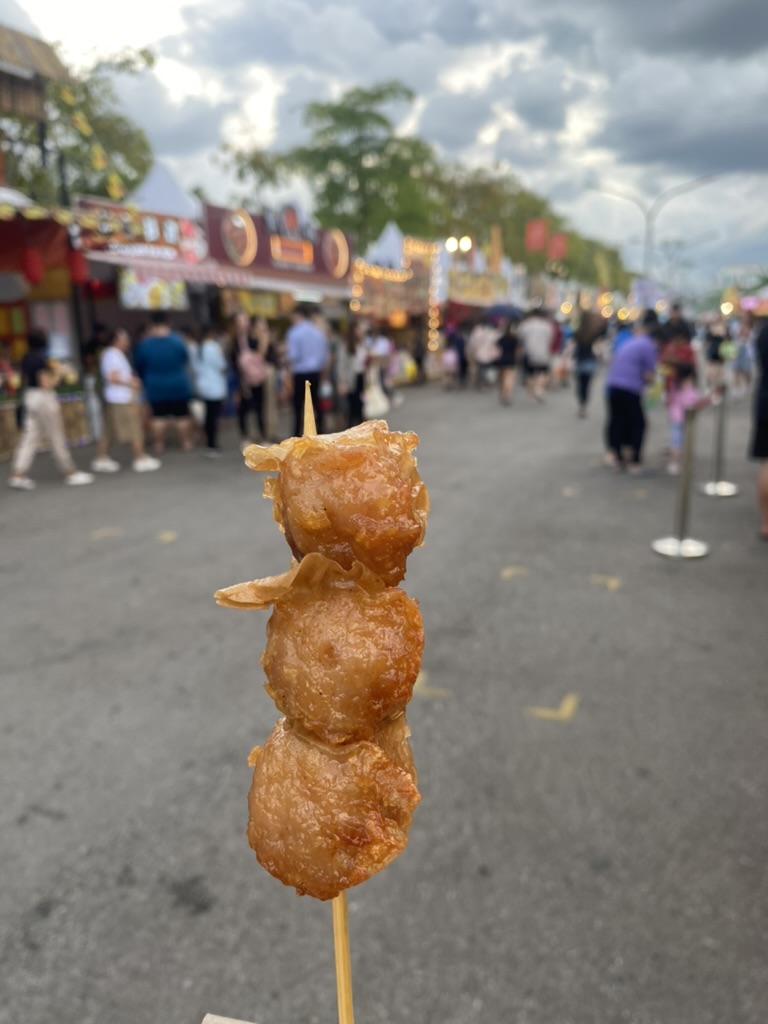
That night, I fall into bed with aching feet and a big smile.
Tomorrow will be an early morning, but so many more adventures are ahead.


You May Also Like
Solo Hiking and Lessons about Life: The Copland Track
Awestruck in the Arctic: an Aurora Borealis Gallery