Solo Travel Snapshots in Vietnam: Sometimes You’re the Enemy
This is my Solo Travel Snapshots in Vietnam Series.
I spent 33 days in Vietnam. Each day brought something different–a different experience or surprising thought or new challenge. I cannot possibly share them all, and even if I did, so much would fall short. Instead of sharing my day-to-day everyday, I want to capture the essence of my Vietnam experience in 10 vivid snapshots. This series will consist of those 10 solo travel snapshots that encapsulate many repeat experiences in Vietnam and throughout Southeast Asia.
This is #6.
Solo Travel Snapshots in Vietnam
- The comedic feeling of yet another thing going wrong, plus needing to relinquish control
- The bonds of travelers
- The peace and serenity of a solo morning exploration
- Remembering not to sweat the small stuff–or the sweaty stuff
- Plastic toddler tables = the best food
- The shame of a nation
July 5-6, 2024
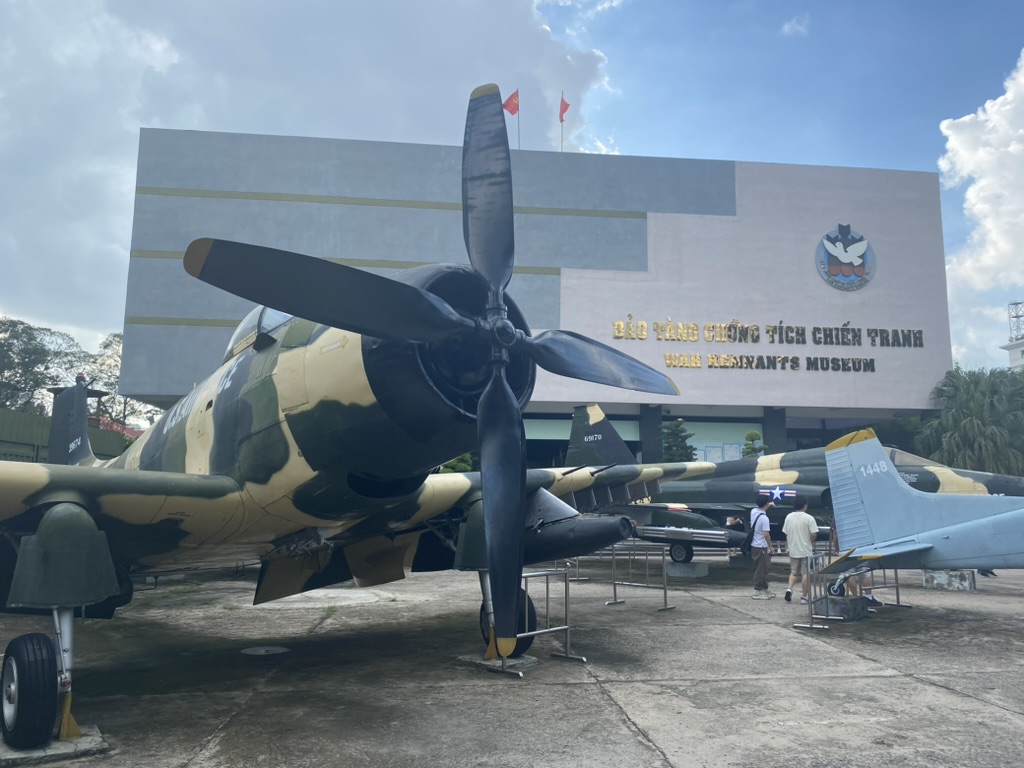
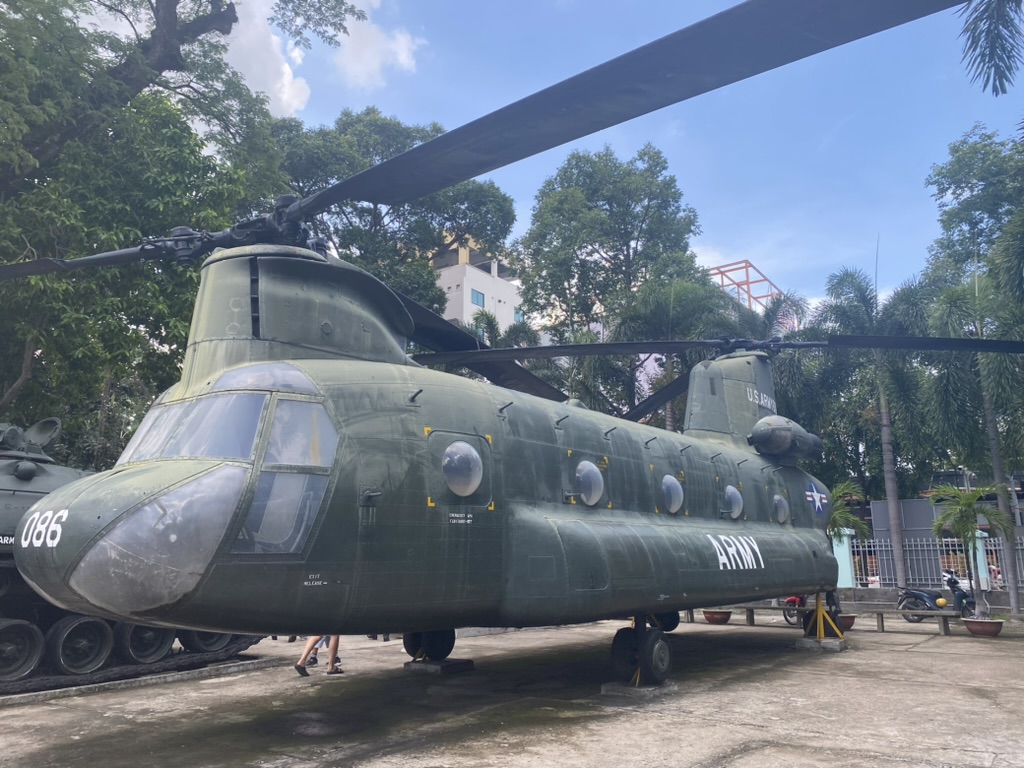
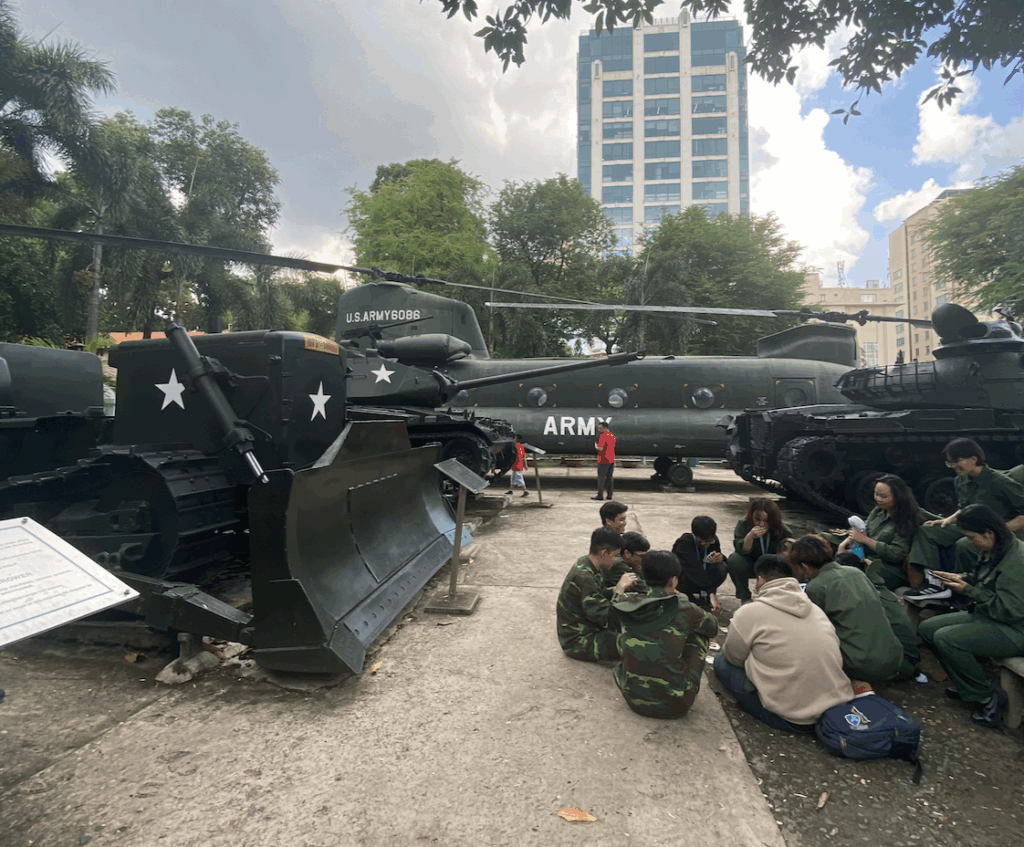
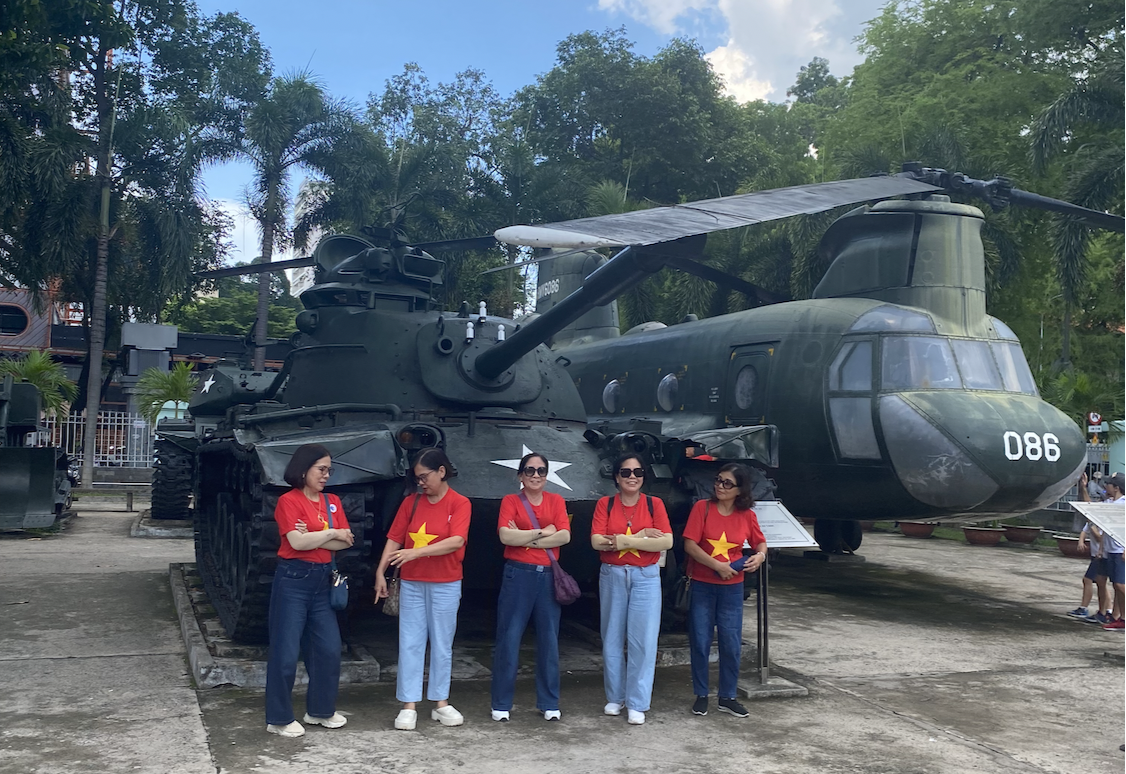
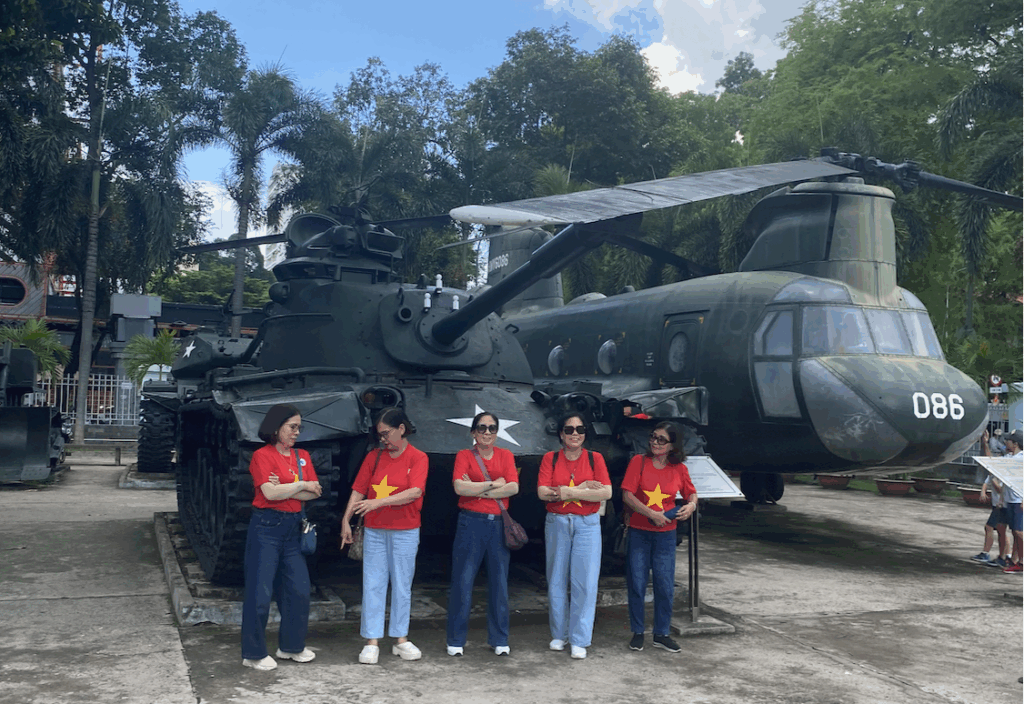
When I first walked through the turnstile into the courtyard, I wondered if it was a spoils of war museum. The courtyard was lined with US war machinery. US Airforce planes, a chinook helicopter, rows of tanks. A group of ladies in red and yellow Vietnam flag t-shirts lined up in front of several, smiling and posing and making the ubiquitous Asian love heart.
Some of the tanks had white stars on the front, and I wondered if they were Vietnamese tanks. Upon closer look, US Army was still stamped along the side in plain-as-day practical white lettering. All the instructions for where to cut to evacuate were in English.
I went inside and climbed to the third floor to start. I’d expected strong AC, which is why I planned my visit to coincide with the hottest part of the day. But, I suppose you aren’t supposed to enjoy any part of your visit to the War Remnants Museum. Instead, the exhibit rooms were stifling. Fans in the corners moved the air if you were close, it otherwise it was stagnant and clinging in the packed room.
I opted to forgo the add on purchase of an audio guide, which worked out well as English accompanied all of the Vietnamese descriptions. There weren’t many, but a few were situated around each exhibit providing background info and centering the exhibit in the entirety of the Indochine war.
First, the focus was on the French. The Vietnamese declared their independence, but the French fought back, worried about the resources they’d been extracting from Vietnam, mainly rubber, coal, and minerals. The sign made sure to emphasize that the US received a lot of those resources too and thus were economically, as well as ideologically, invested in the future of Vietnam. I’m sure both played into the US decision to help fund the French. And then to primarily fund the French. A diagram showed how the US contribution to total money spent in the Vietnam conflict went from about 16% to over 80% by the last year.
Then it was over and the French were gone, leaving their remnants everywhere. Vietnam had a president and immediately the US began meddling. The north argued with the south. The south began putting communists in prisons and then began to fight the north using equipment donated by the US and advice given by the US and military training provided by the US and bullets supplied by the US.
The US, of course, had to have a presence in Vietnam if they were providing all this aid (over 2,000 military advisors). And then the US helped assassinate the South Vietnamese leader because they didn’t think he could hold against Ho Chi Minh. Finally, the North Vietnamese directly attacked a US ship in the gulf of Tonkin and the US joined the war.
Of course, later on it was discovered that the US faked the Gulf of Tonkin incident. I guess they were tired of watching over their protegé’s shoulder.
Most of the war remnants exhibits are photographs. Photographs of uniformed US soldiers jumping from planes and helicopters. Photos of US tanks rolling along roads as farmers plow their rice fields in the foreground. Photos of Vietnamese villages fortified with bamboo fences. Photos of Vietnamese soldiers in ditches awaiting the enemy. Photos of US soldiers in ditches awaiting the enemy. Photos of soldiers crossing rivers with their guns over their heads. The photos are complied from Vietnamese, US, Korean, and other war reporters. Both sides look so young.
Please note there are several disturbing photos in the next few paragraphs.
The photos shift to US soldiers in head to toe uniforms surrounding shirtless and shoeless Vietnamese. The captions begin to sound the same: “US soldiers discover an old man and his grandson in a rice field and suspect they are Viet Cong (southern Vietnamese guérillas supporting the north agenda) and take them away for questioning. They were unharmed.”
Soon, it’s photos of Vietnamese people hanging upside down from trees. Vietnamese people with guns in their faces. Vietnamese people with twisted faces and arms wrenched behind their bodies. Vietnamese people with cloth over their faces and water being poured over it. Vietnamese people dragged behind tanks until dead. All suspected Viet Cong. Some confessed, the captions say, to shooting several soldiers from a church nave. But most are inconclusive.
Occasionally the photo is of a South Vietnamese person shooting the suspected VC, but mostly it’s the US soldiers.
Interspersed are photos of US soldiers crying over ammunition boxes as they mourn lost friends and makeshift memorials of boots, guns, and helmets in empty fields, and rows of wrapped bodies on boards, prepped for evac.
War breaks you in more ways than one.
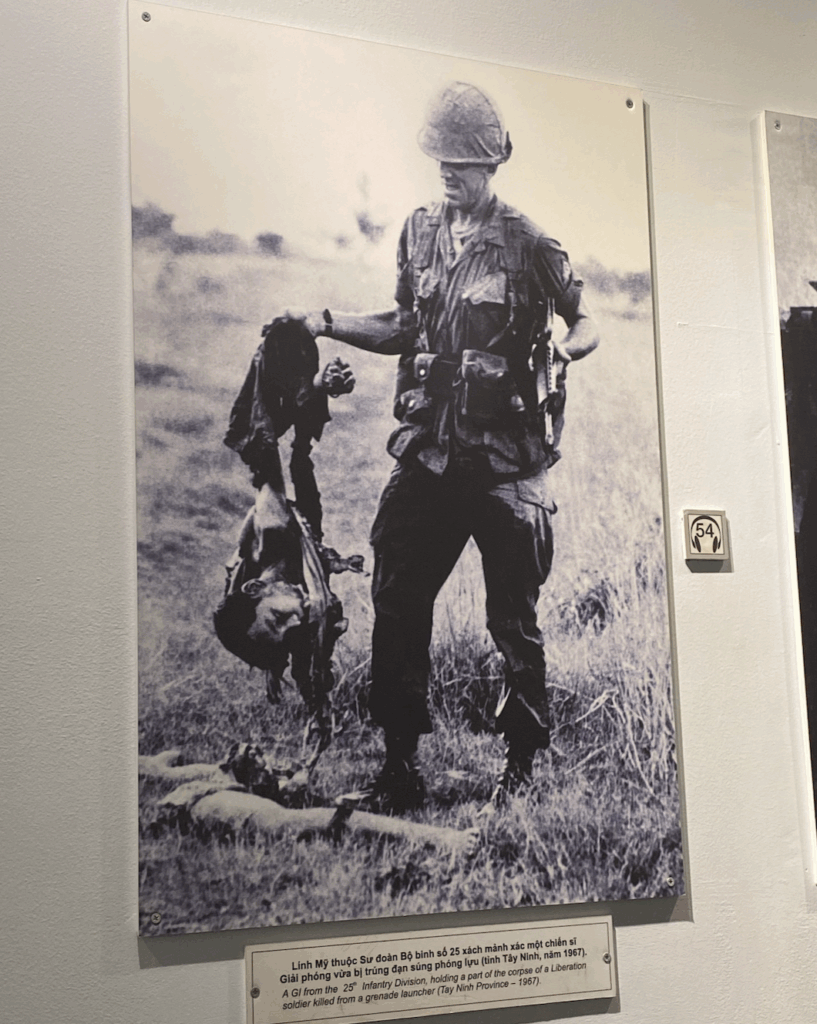
A photo a little further along in the exhibit proves this. It shows several soldiers kneeling proudly in front of decapitated Vietnamese men, the heads lined up in front of the soldiers like a hunter posing by his trophy deer. Beneath the photo, not as a caption added later, but as one published with the initial photo, are the words of a US soldiers saying that war breaks people and telling new recruits that they don’t have to end up like those soldiers.
But I don’t know know how you avoid that when you encounter things like what’s in this photo. How can you not shatter when you’re surrounded by pieces of people?
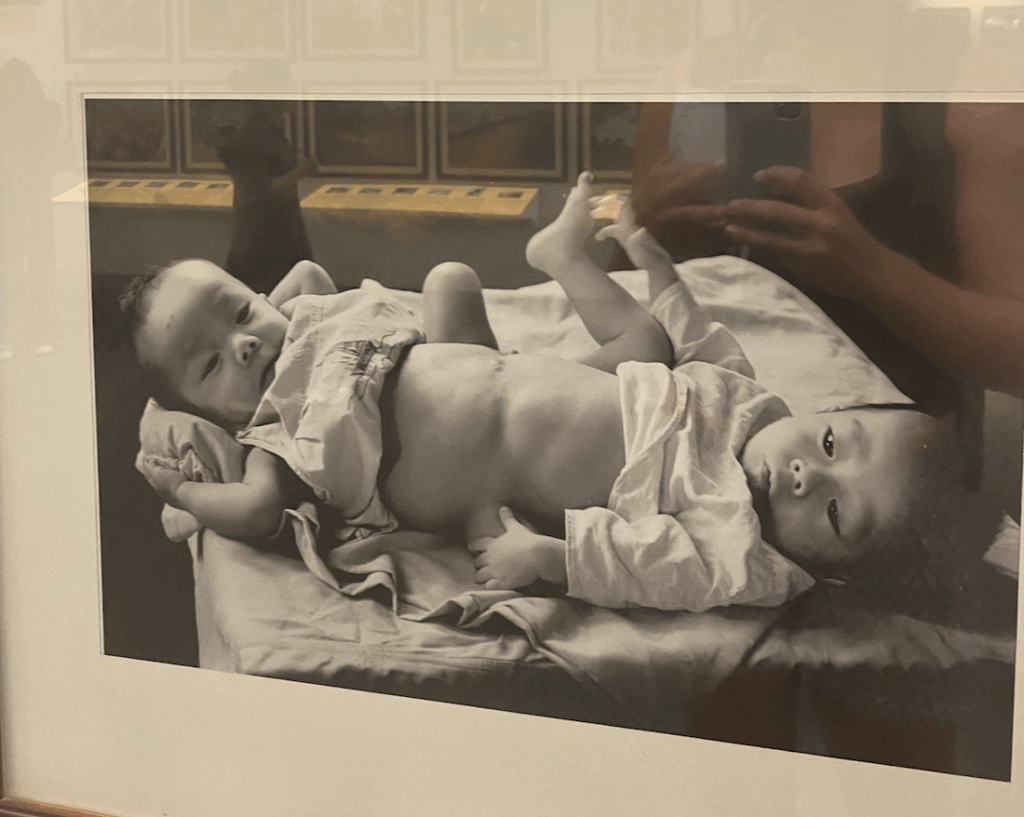
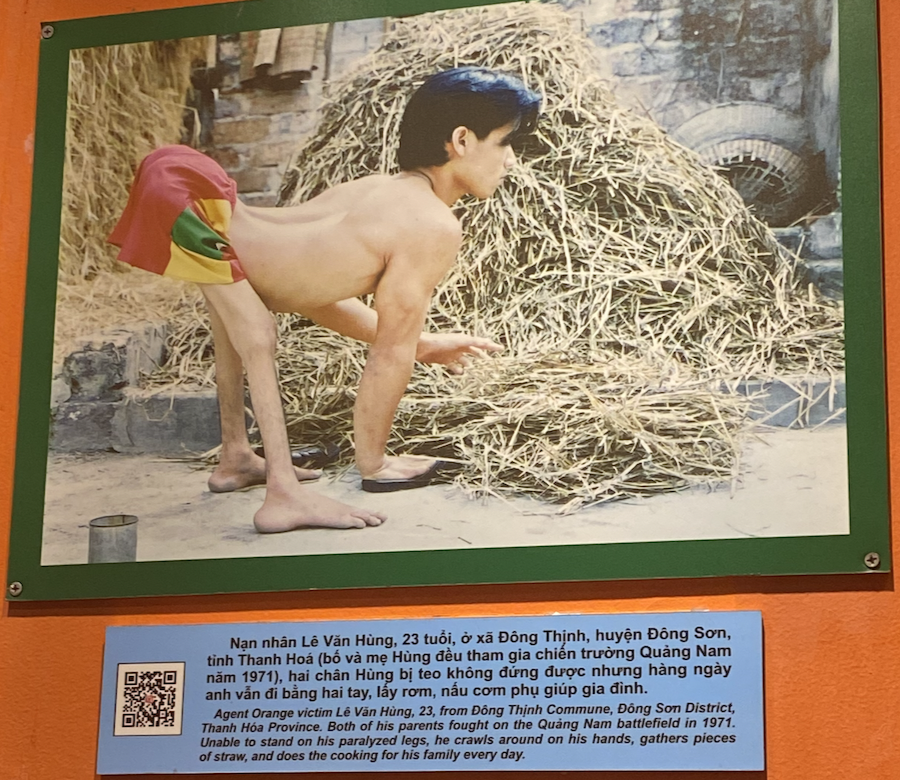
It gets even worse. The last room is dedicated to the victims of agent orange, the chemical the US sprayed in droves into the jungle. Intended to defoliate leaves so they could see the enemy in the jungle and to hinder the food supply, the effects on people are far more horrendous. And they last for generations. It’s like a science fiction movie, but it’s real. Two babies attached at their waists. A man with paralyzed legs and a back so uneven that he has to crawl around on his hands to get around. People who will never walk. People with faces so twisted they don’t look human. More than 3 million Vietnamese have been or currently are victims of Agent Orange.
I walk out of that museum not even understanding how the Vietnamese can possibly look at me. How they can let Americans into their country. I’m sure I will feel the same way in Laos where the US carpet bombed the country enough to make it “the most bombed country in the world” even though they weren’t even at war. It makes me sick to think of human beings doing that to other human beings.
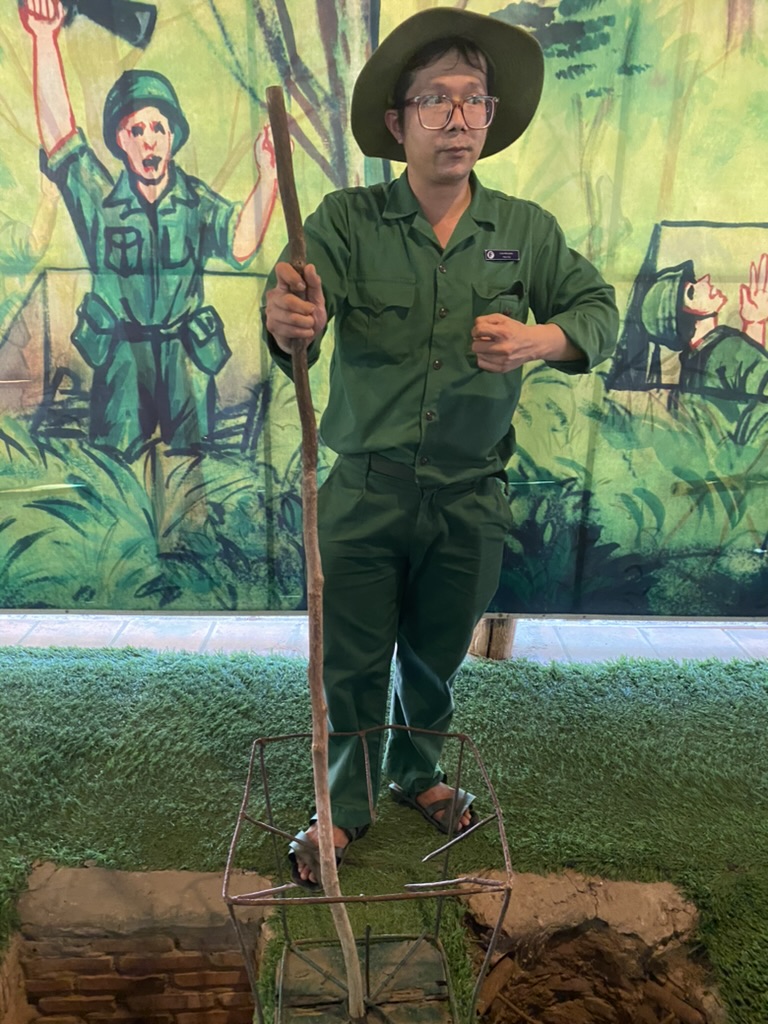
The next day, I visit the Cu Chi Tunnels and it’s a spectacle–bringing tourists through the narrow tunnels. Tunnels they’ve had to widen so that we can even fit into them. Everyone gets their photo taken disappearing into the tunnel. It’s so insensitive, but the Vietnamese tour guides encourage it. Laugh about it.
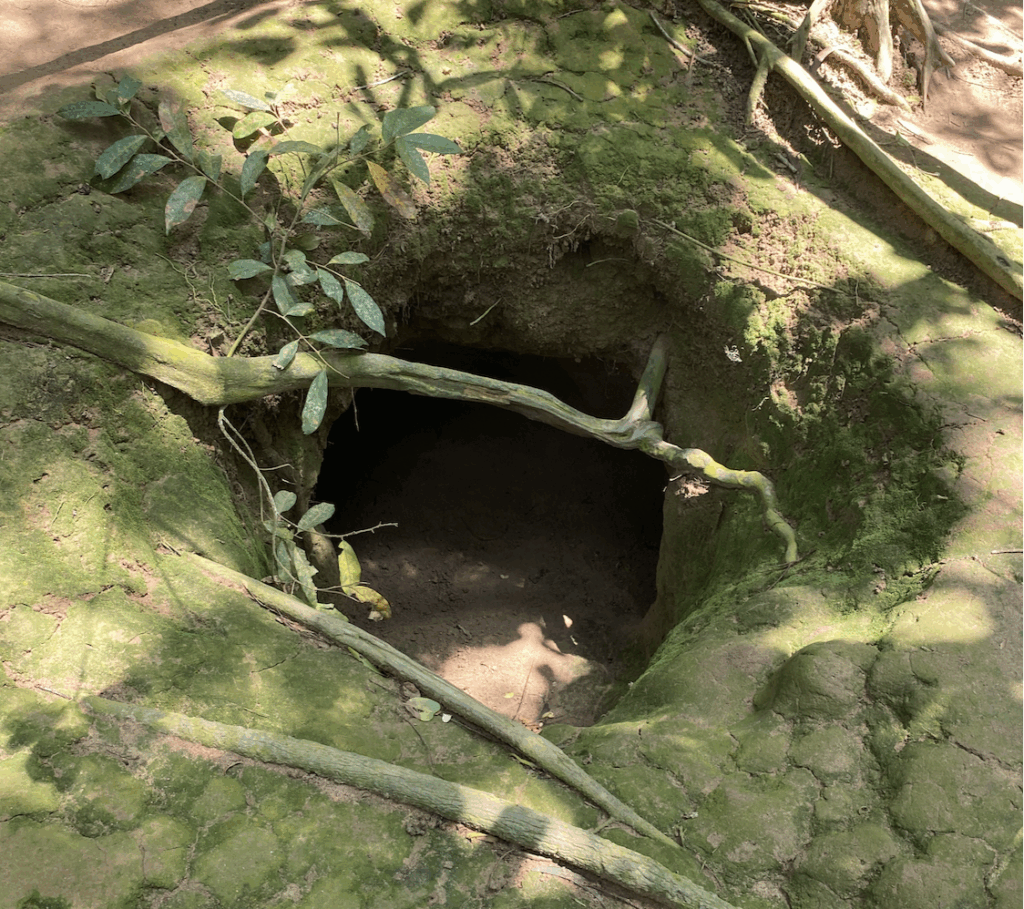
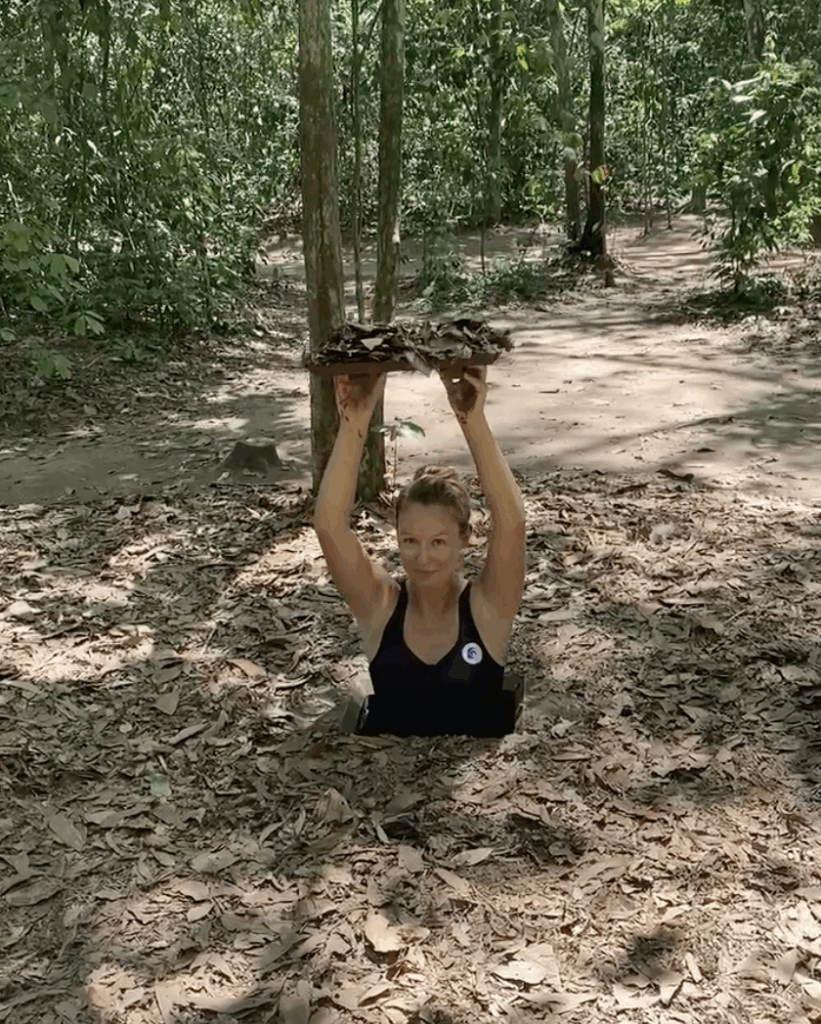
And I understand.
They won.
The effect on Vietnam was far worse than for the US–the victims, the poverty, the bombs, the lasting trauma. Sapa, Dong Van, Cat Ba, Hanoi, Hue, Hoi An, Da Lat… Everywhere I’d gone, the war still remained in bunkers and planes and hospitals.
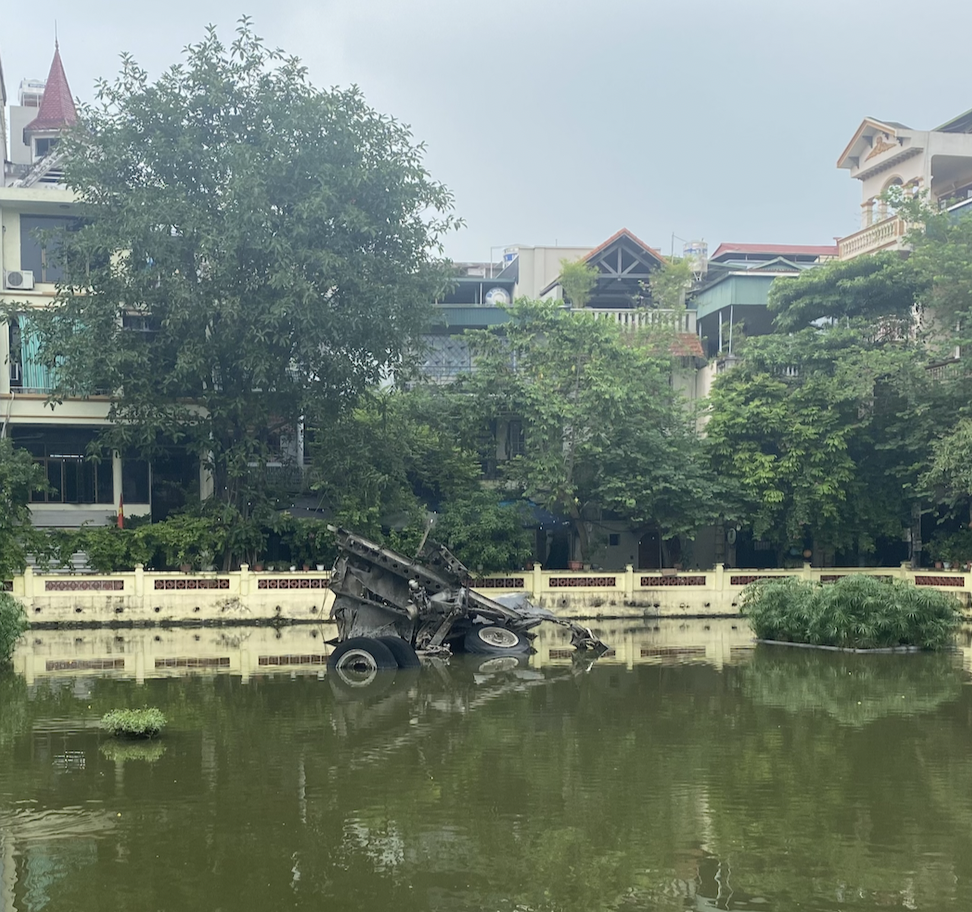
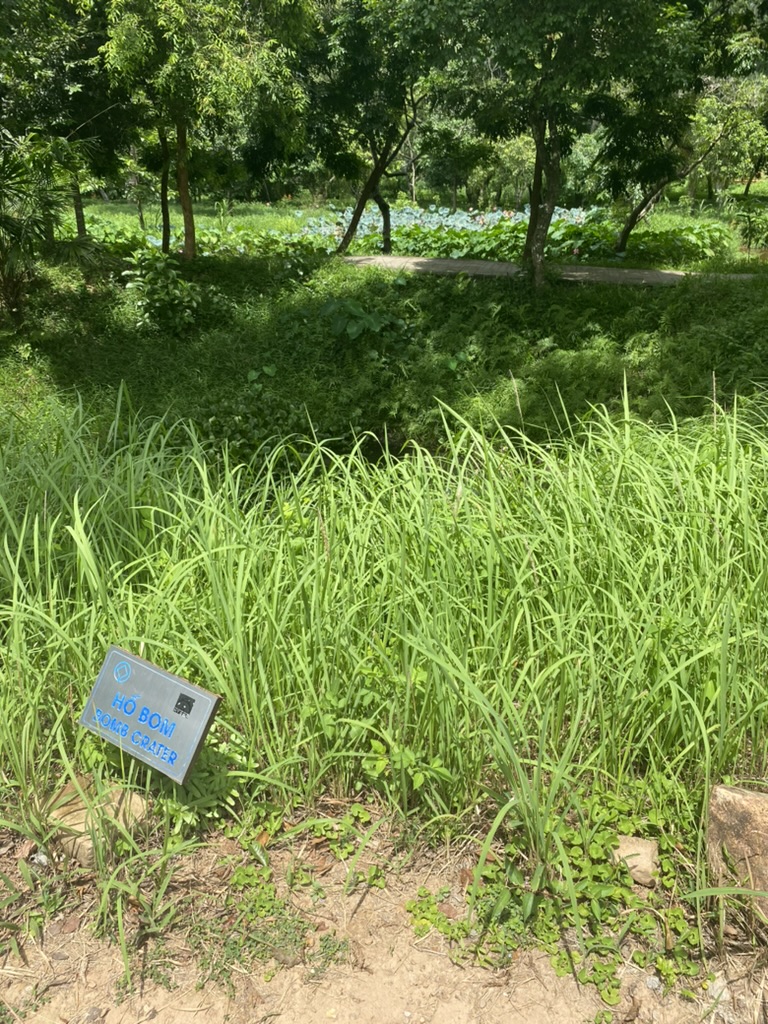
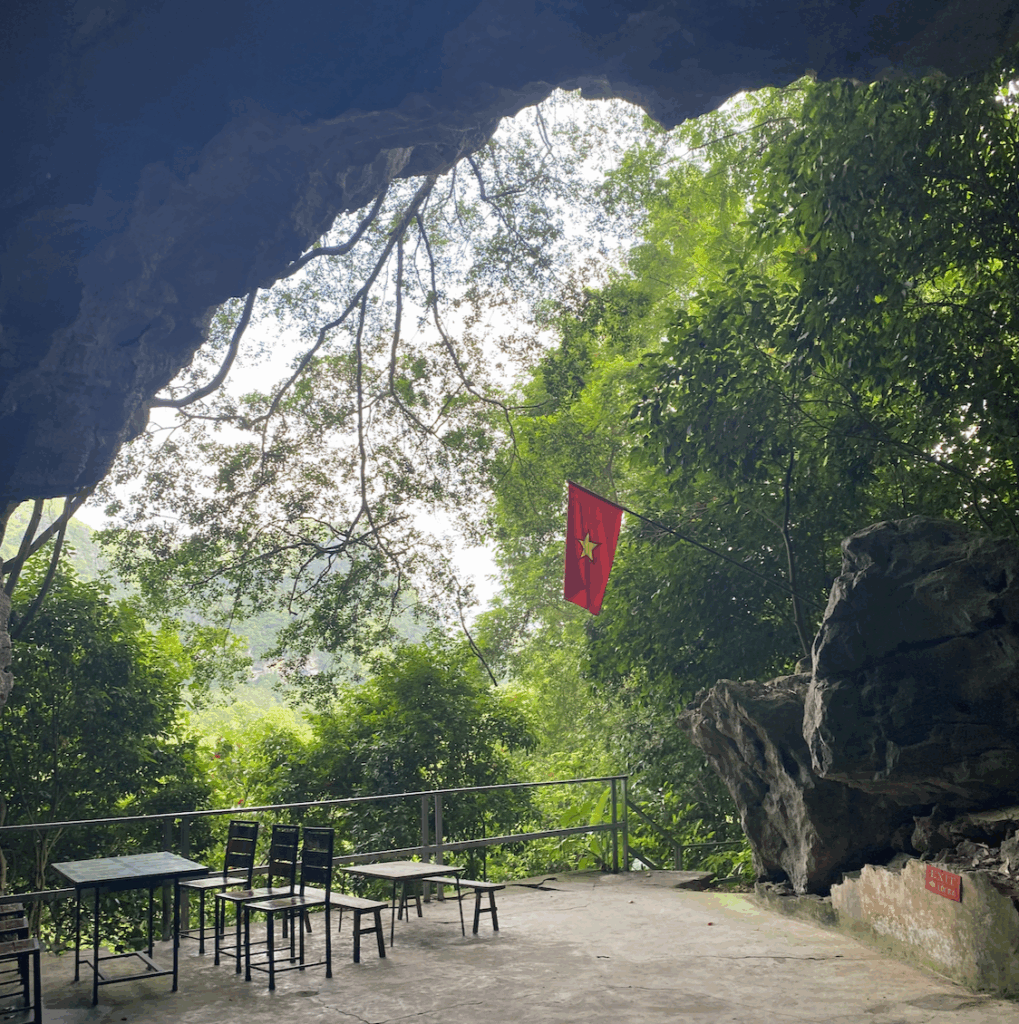
Despite it all, despite the pain and the horror, the Vietnamese won.
That’s why they can have Americans visit. That’s why they take us to the tunnels, and show us with glee the places where they terrorized American soldiers. That’s why they have the US tanks parked in the courtyard of the War Remnants Museum right next to all the photos of suffering. Because they won, and if they don’t reinforce that, then they actually have to deal with the misery and suffering that the US, and the Vietnamese, inflicted upon their people.
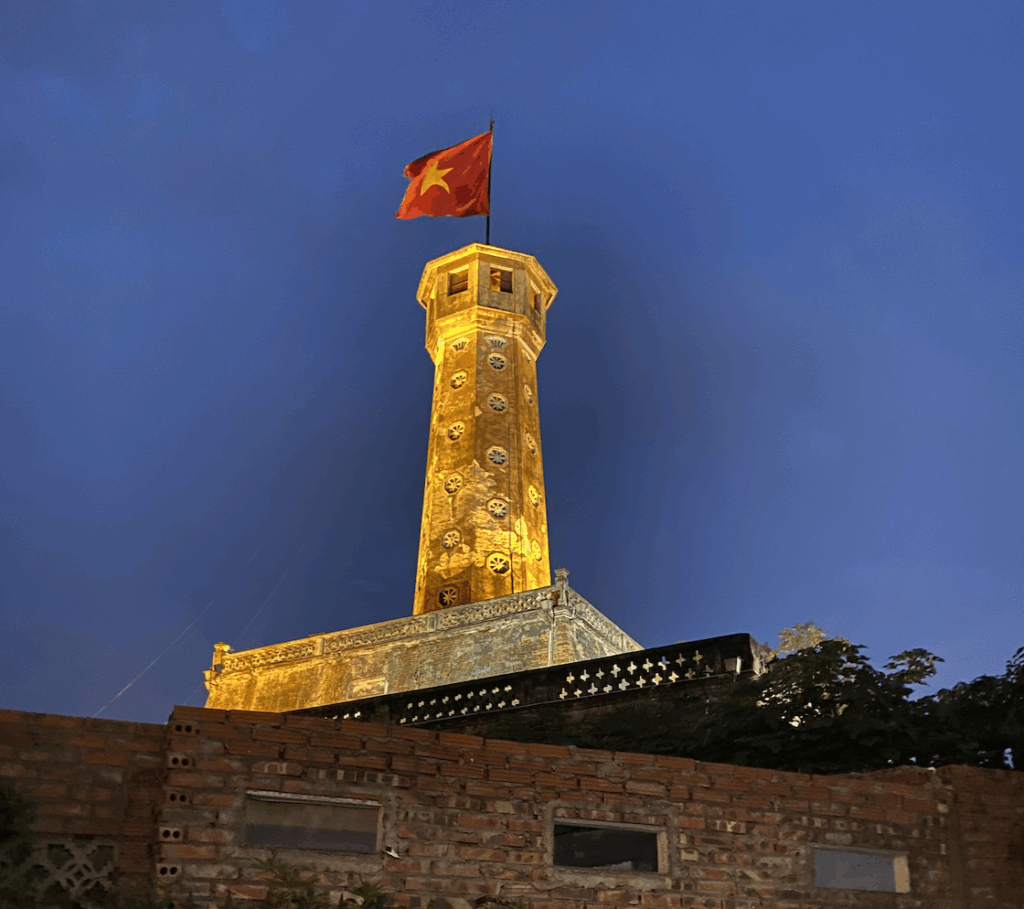
It doesn’t matter what they tell themselves or what we tell ourselves. It is horrible and heart breaking and makes me wish I wasn’t even peripherally related to it. It makes me wish we’d learn, because you can’t tell me that just because Agent Orange isn’t being sprayed in Ukraine and Israel, that the people there are suffering any less.
But it continues.
Will we ever learn?
Probably not if we keep taking photos in front of tanks, whether the tanks are ours or the ones we won from enemy countries.
There is nothing glorifying in war.


You May Also Like
A Gem in the German Alps: Garmisch-Partenkirchen in Springtime
Home on the (Mountain) Range